2026 Top Freeze Dried Fruits Powder Suppliers?
The 2026 Freeze Dried Fruits Powder market is moving beyond novelty snacks. It now supports beverages, bakery fillings, nutrition mixes, dairy products, and clean-label formulations. Grand View Research identifies freeze-drying as a growing preservation technology, supported by demand for convenient, nutrient-rich ingredients. Its market analysis also highlights expanding applications across food and beverage categories.
Market momentum appears substantial. According to IMARC Group, the global freeze-dried food market continues to expand as consumers seek longer shelf life without heavy processing. Innova Market Insights reports that natural positioning, recognizable ingredients, and functional nutrition remain influential product-development trends. These findings matter to buyers comparing suppliers, because demand alone cannot prove manufacturing quality.
The best 2026 suppliers should demonstrate more than attractive color samples. Buyers need documented origin, particle-size control, moisture specifications, microbiological testing, allergen management, and stable packaging. A bright strawberry powder should still perform consistently in yogurt, smoothies, or a dry premix after transport. Certification from recognized systems, such as HACCP, ISO 22000, or BRCGS, can strengthen supplier credibility, but certificates require verification.
No ranking is perfect. A spreadsheet cannot show every factory practice. This guide therefore considers product consistency, traceability, processing capability, technical support, minimum order quantities, and commercial reliability. Supplier claims should be checked against current test reports and shipment records. That extra step may feel slow. It often prevents expensive reformulation later.
What Are Freeze-Dried Fruit Powders and Why Are They Popular?
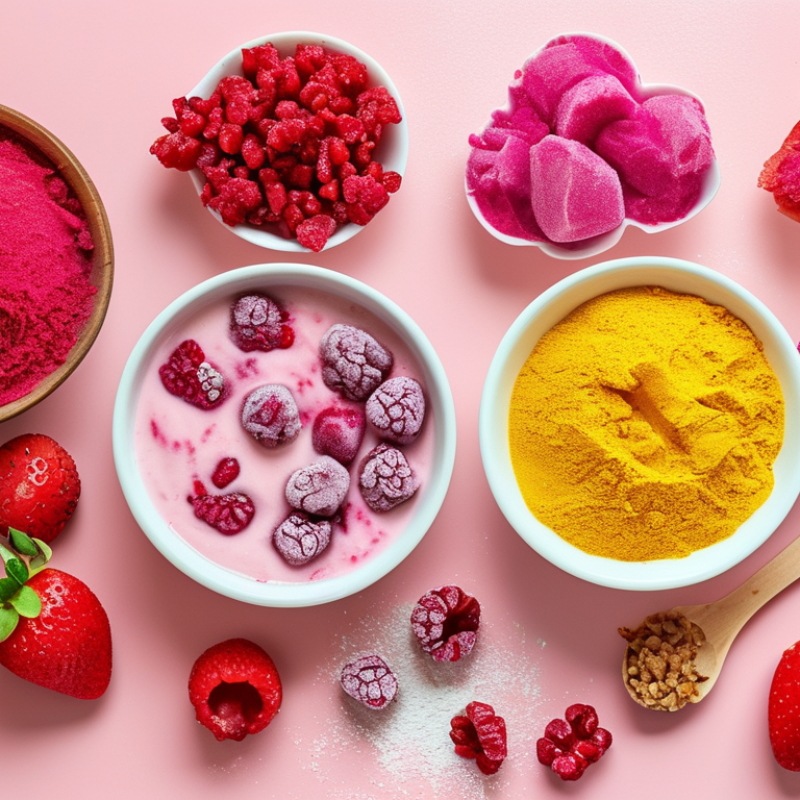
Freeze-dried fruit powders are made by freezing ripe fruit and removing moisture under low pressure. This process helps retain the fruit’s natural color, aroma, and fine flavor. The powder can dissolve into smoothies, yogurt, sauces, bakery fillings, and nutrition blends. It also weighs less than fresh fruit and needs no peeling or cutting.
Their popularity comes from convenience and consistency. A spoonful can deliver raspberry color or mango flavor throughout a recipe. The powder also stores more easily than fresh fruit when sealed properly. However, it is not identical to fresh produce. Some delicate nutrients may decrease during processing, and the final nutrition depends on the original fruit and drying conditions. That distinction matters.
In practical formulation work, moisture control is often the overlooked detail. Fruit powder can absorb humidity quickly, forming small hard lumps inside an opened pouch. A dry scoop, airtight packaging, and cool storage help protect its texture. Suppliers should provide ingredient details, batch testing, moisture data, and allergen information. Reliable documentation is more valuable than bright color alone. The texture is not always perfect. Some powders taste sharply acidic, while others seem weaker than expected. Testing a small sample in the intended recipe remains wise, especially when choosing powders for commercial production.
How to Evaluate Freeze-Dried Fruit Powder Suppliers in 2026
2026 Top Freeze Dried Fruits Powder Suppliers?
How to Evaluate Freeze-Dried Fruit Powder Suppliers in 2026
Choosing a supplier requires more than comparing price per kilogram. Ask for a recent certificate of analysis from the exact production batch. Check moisture, water activity, microbiological results, pesticide residues, and heavy-metal testing. A clear lot number should connect the powder to fruit origin, processing records, and shipment data. Good documentation matters.
Request samples from at least two batches. Examine color, aroma, particle size, solubility, and taste after rehydration. Natural variation is normal. Extreme uniformity may deserve questions. Ask how the supplier controls freeze-drying temperature, milling heat, oxygen exposure, and packaging humidity. These details influence nutrient retention and flavor. Nitrogen-flushed, moisture-resistant packaging can protect quality during storage, but it cannot replace laboratory testing.
In purchasing reviews, I have learned that no supplier looks perfect on paper. A careful evaluation can still miss batch inconsistency. That risk is easy to underestimate. Review food-safety certifications, audit history, complaint handling, and recall procedures. Speak with a technical contact, not only a sales representative. Reliable teams explain limitations and provide realistic shelf-life data. “100% natural” means little without detailed specifications. Confirm lead times, minimum order quantities, transport conditions, retention samples, and acceptance limits before signing. The cheapest powder may become expensive after clumping, color drift, or failed production trials.
Top Supplier Categories and Leading Market Options
Freeze-dried fruit powder suppliers usually fit four categories: farm cooperatives, specialist processors, ingredient distributors, and contract manufacturers. Cooperatives may offer strong traceability from orchards or berry fields. Processors often provide better control over drying, milling, and particle size. Distributors can simplify multi-country purchasing, although their sourcing layers may be less visible.
Leading market options differ by application. North American suppliers often support beverage, bakery, and nutrition manufacturers with standardized documentation. European options may emphasize organic systems, allergen controls, and detailed sustainability records. Asian-Pacific processors can provide tropical powders, including mango, pineapple, dragon fruit, and banana. Regional suppliers may offer fresher harvest links, but export experience must be checked carefully.
Quality review should begin with a representative sample, not attractive photography. Ask for moisture, water activity, microbiological results, pesticide-residue testing, origin records, and a current specification sheet. Confirm whether the powder contains only fruit or includes carriers, sweeteners, or flow agents. Packaging should protect the powder from oxygen, humidity, heat, and light. Details matter. Samples help.
A practical comparison also includes minimum order quantity, lead time, batch consistency, recall procedures, and communication speed. I would not treat a certificate list as complete proof of reliability. Documents can be outdated. This method is useful, but not flawless. A supplier may pass laboratory checks yet struggle with seasonal supply or fine-powder handling. Buyers should record each finding and reassess suppliers after new harvests, process changes, or unexpected color and flavor differences.
Key Quality, Safety, and Certification Standards to Compare
2026 Top Freeze Dried Fruits Powder Suppliers? Key Quality, Safety, and Certification Standards to Compare
Choosing a freeze-dried fruit powder supplier requires more than checking color and price. Inspect the raw fruit source, harvest records, and processing controls. A bright red powder may still hide oxidation or excessive moisture. Ask for recent certificates of analysis from the exact production lot. Useful results include moisture, water activity, microbiological counts, heavy metals, pesticide residues, and allergen controls.
Food safety deserves strict attention. The World Health Organization estimates that contaminated food causes about 600 million illnesses and 420,000 deaths worldwide each year. This figure comes from its global foodborne disease burden report.
Compare suppliers using HACCP plans and food safety systems certified to ISO 22000 or a recognized GFSI scheme. Organic certification may matter, but verify its scope, renewal date, and issuing body. A certificate alone is not proof of every batch.
Tips: Request a sealed sample, full specification sheet, traceability exercise, and packaging photographs. Test the powder after delivery, not only before purchase. Check whether nitrogen flushing, light protection, and moisture barriers are used. I would also compare three lots, because one excellent sample can mislead. Some suppliers provide impressive documents but weak communication during complaints. That detail deserves attention.
How to Choose the Best Supplier for Your Business Needs
Choosing a freeze-dried fruit powder supplier requires more than comparing price lists. Grand View Research’s 2024 report estimates steady growth in the global freeze-dried food market through 2030. This growth increases supplier choices, but quality can vary sharply between factories.
Request a recent certificate of analysis for every proposed powder. Check moisture, water activity, microbiological limits, pesticide residues, particle size, and nutritional values. Ask where the fruit was grown and how each batch is traced. A reliable supplier should explain its drying temperature, packaging barrier, storage conditions, and shelf-life testing in clear language. Vague answers are warning signs.
Start with a small production sample. Test its color, aroma, solubility, sweetness, and performance in your actual recipe. According to a 2024 report by Mordor Intelligence, demand is expanding across beverages, bakery products, and nutritional applications. Your supplier must therefore support consistent specifications at larger volumes. Confirm minimum order quantities, lead times, backup raw-material plans, and export documentation before signing. Certifications such as HACCP, ISO 22000, or an equivalent audited system can strengthen confidence, but certificates alone prove little. A document can be current while daily practices drift. That is the uncomfortable part. Review audit dates, laboratory methods, and complaint records, then repeat testing when the powder reaches your warehouse.