
In today's competitive market, businesses are constantly seeking innovative printing solutions. UVLED Flatbed Printing stands out as a revolutionary technology that offers numerous advantages. According to a recent report by the Printing Industries of America, UVLED printing has grown by 35% in the last three years, reflecting its increasing adoption across various sectors.
Experts like Dr. Emily Chen, a leading authority in printing technology, emphasize the significance of this shift. She states, "UVLED Flatbed Printing not only enhances speed but also improves sustainability for businesses." This technology allows for high-quality prints on diverse materials, reducing waste and energy consumption.
Despite its benefits, companies must carefully evaluate their specific needs. While UVLED Flatbed Printing is cost-effective long-term, the initial investment may deter some. Businesses should reflect on their operational goals and market demands before transitioning. The right approach to adopting this technology can lead to significant growth and innovation.
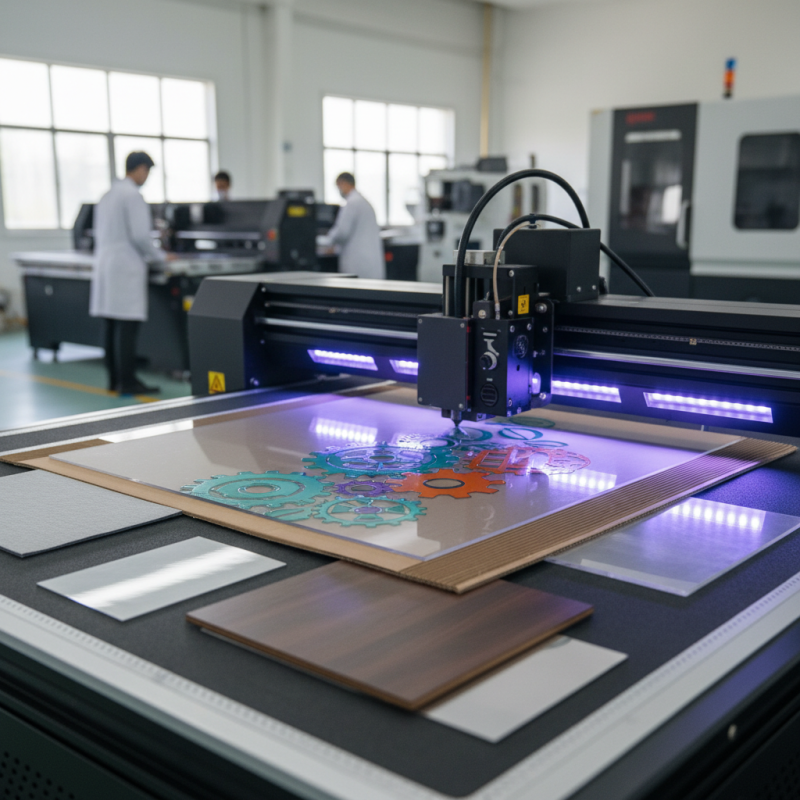
UVLED flatbed printing offers significant benefits for business efficiency. This technology uses ultraviolet light to cure inks instantly. As a result, businesses can produce high-quality prints more quickly. The immediate curing process minimizes drying time. This rapid turnaround can enhance overall productivity.
Moreover, the versatility of UVLED printing is remarkable. It allows printing on various materials, including wood, metal, and plastic. Businesses can expand their offerings without investing in multiple printers. This capability can lower costs in the long run. However, companies need to ensure they have the right substrates. Not all materials react well to UV printing.
One potential downside is the initial investment in UVLED technology. The equipment can be costly. Smaller businesses may struggle to afford it. Yet, the long-term savings and increased revenue potential can justify the expenditure. Continuous evaluation of the printing process is essential. Adjustments may be necessary to achieve optimal results.
UVLED technology brings remarkable improvements to print quality. This innovation allows for vibrant colors and intricate details. Businesses can achieve greater color accuracy, making designs truly stand out. The inks are cured instantly, which prevents smudging. This means every print emerges as intended.
Moreover, UVLED printing is not without its challenges. Sometimes, the calibration can be finicky. Getting the perfect balance of speed and quality may require adjustments. Colors might appear different on various substrates. It’s crucial to test prints before large runs. This helps avoid potential mismatches.
Another key aspect is the longevity of prints. UVLED prints resist fading and wear, providing durability. This is beneficial for outdoor applications. However, not every surface suits UVLED inks. It’s essential to choose materials wisely. In the end, while UVLED offers fantastic benefits, attention to detail remains vital. Businesses must refine their processes continually.
UVLED flatbed printing is quickly becoming a popular choice for businesses seeking cost-effective solutions. One of its most significant advantages is the reduced operational cost. Unlike traditional printing methods, UVLED technology requires less energy, which translates to lower utility bills. This efficiency can impact a business's bottom line positively.
Moreover, UVLED flatbed printing requires fewer consumables. Traditional inks can be pricey, while UV inks often have a longer shelf life. This means less waste and more savings. Companies might find that inventory management becomes simpler, as they don't need to maintain large quantities of various ink types. This shifts the focus from spending to investing in growth.
It's also essential to consider potential initial costs. While UVLED printers can have a higher upfront price, their longevity often compensates for that investment. Repair and maintenance can be less frequent, saving time and money. However, not every business is ready for this transition yet. Some may face challenges in adapting their workflow. It's worth exploring if the shift aligns with overall business goals.
UVLED flatbed printing offers remarkable versatility when it comes to materials. This technology allows printing on a variety of surfaces including wood, metal, glass, and plastics. According to a report by Smithers Pira, the flatbed printing market is expected to grow significantly, reaching $10.5 billion by 2024. Businesses can take advantage of this trend by expanding their material options.
The adaptability of UVLED printing supports businesses in producing customized products. For instance, it can easily print on uneven surfaces. This feature is crucial for creating unique signage or promotional items. Additionally, the wide range of compatible substrates allows for creative experimentation. However, it is vital to choose appropriate materials carefully. Some substrates may require specific treatments before printing.
Moreover, while UVLED technology offers significant benefits, it doesn't come without challenges. The initial setup costs can be high, and experiencing ink adhesion issues is not uncommon. Businesses must evaluate their specific needs and capabilities. Investing in UVLED flatbed printing can yield positive outcomes. However, a thorough understanding of material compatibility is essential for success.
| Material Type | Benefit | Applications |
|---|---|---|
| Wood | High adhesion and vibrant colors | Furniture, signage, custom designs |
| Metal | Durability and weather resistance | Industrial labeling, home decor |
| Glass | Crystal clear print quality | Architectural applications, art pieces |
| Plastic | Versatile and lightweight | Packaging, promotional items |
| Textiles | Soft hand feel with vivid colors | Fashion, banners, uniforms |
| Foam Board | Lightweight with easy handling | Trade show displays, interior signage |
| Acrylic | High gloss finish and thickness options | Awards, trophies, artistic installations |
| Paper | Cost-effective and customizable | Business cards, brochures, packaging |
| Ceramics | Durable and heat resistant | Custom tiles, dinnerware |
| Concrete | Unique textures and finishes | Outdoor art, architectural features |
UVLED technology in printing offers significant sustainability benefits for businesses. This method consumes less energy compared to traditional printing processes. It uses UV light to cure inks almost instantly, reducing drying times. This efficiency not only saves energy but also minimizes waste.
The inks used in UVLED printing are often more eco-friendly. They contain fewer volatile organic compounds (VOCs), making them safer for workers and the environment. A noteworthy aspect is the reduction of harmful emissions during production. Businesses can market their commitment to sustainability when they adopt such practices.
However, some challenges still exist. The initial investment for UVLED technology can be high. Training staff to handle new systems may require time and resources. It's crucial for businesses to consider these factors. Balancing the upfront costs with long-term benefits is not always straightforward. Yet, the potential for a greener future is worth exploring.