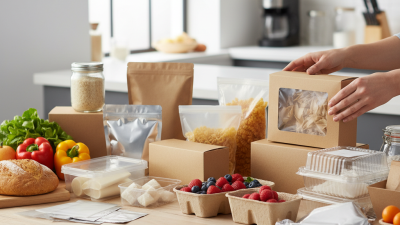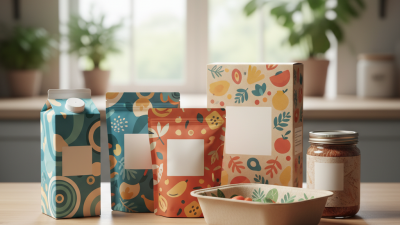
The burger packaging industry is evolving rapidly as we approach 2026. With sustainability and innovation at the forefront, packaging must meet new consumer demands. Industry expert Jane Smith emphasizes, “The future of burger packaging lies in eco-friendly options.” This reflects a shift towards materials that reduce environmental impact.
Today’s consumers are more informed. They seek transparency from brands and expect packaging to tell a story. Brands must adapt to these changing preferences. Many burger restaurants are experimenting with biodegradable wrappers and reusable containers. This not only enhances brand image but also aligns with global sustainability goals.
However, not all packaging innovations resonate. Some options fall short in practicality or cost-effectiveness. Companies must reflect on their choices and consider consumer feedback. Updating burger packaging is complex and requires a balance of creativity and responsibility. As we look forward, the challenge remains: how to innovate while prioritizing both taste and sustainability.
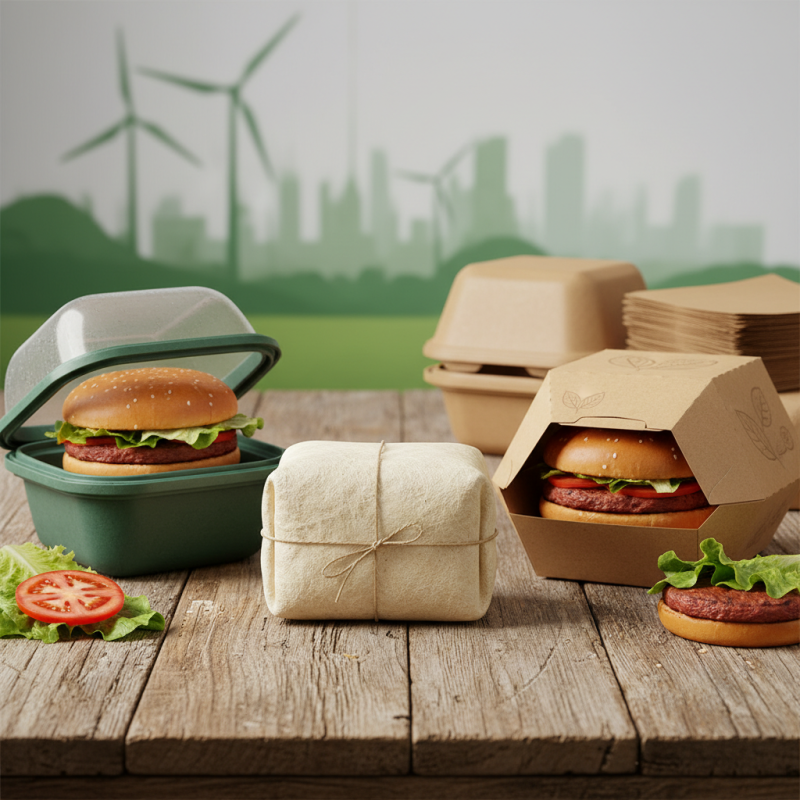
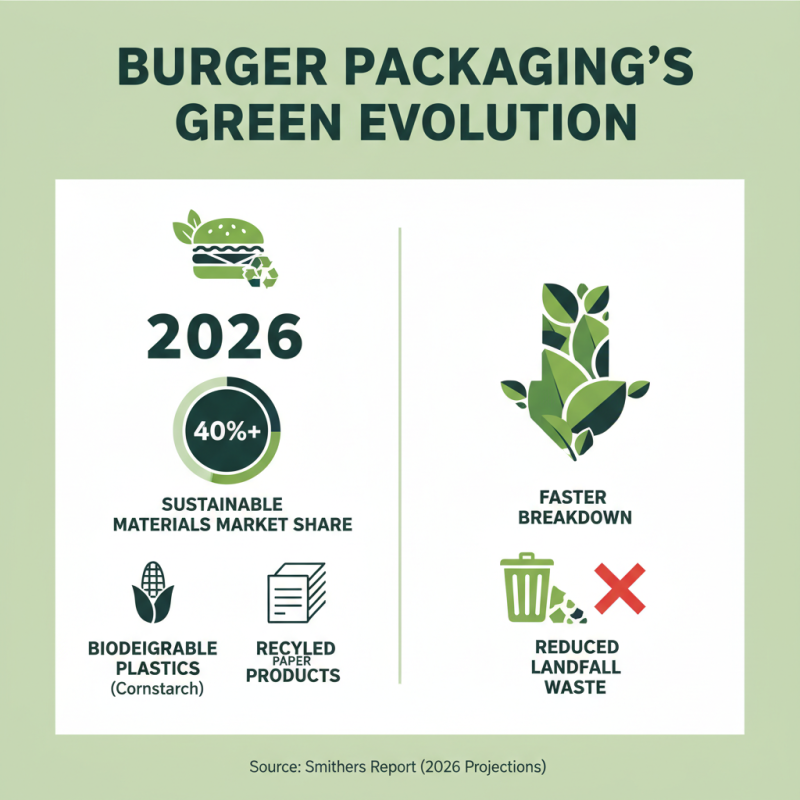
The burger packaging industry is evolving rapidly. In 2026, sustainable materials will dominate packaging trends. A recent report by Smithers indicates that eco-friendly materials could constitute over 40% of the burger packaging market by then. Biodegradable plastics made from cornstarch and recycled paper products are gaining popularity. These materials break down faster than traditional plastics, reducing landfill waste.
Moreover, many companies are exploring plant-based inks for printing. These inks, derived from vegetable oils, are safer for the environment. The market research firm Grand View Research predicts that the demand for sustainable packaging will increase significantly, with a compound annual growth rate of 11.4% through 2026. However, the transition isn't without challenges. Some sustainable materials may not withstand the heat of cooking or may compromise food safety.
Not all consumers are ready to embrace these changes. Price sensitivity remains a concern, as biodegradable options often cost more. This hesitation can slow the adoption of greener practices in the industry. Balancing sustainability with performance is essential. It requires careful consideration and innovative solutions from manufacturers.
The burger packaging industry is evolving rapidly. Innovative designs are enhancing user experience significantly. According to a recent report, nearly 70% of consumers prefer packaging that is easy to handle. This trend is pushing brands to rethink how they present their products.
Environmentally friendly materials are gaining traction. Many companies are now using biodegradable options. This shift caters to eco-conscious customers who prioritize sustainability. For instance, a study indicated that 55% of consumers are willing to pay more for environmentally friendly packaging. However, it poses challenges for manufacturers. The balance between cost and sustainability needs careful consideration.
Tips: Focus on practicality. Design packaging that allows for easy carrying and consumption. Consider the shape and size carefully. Engaging designs can attract attention but should not compromise functionality. Another point to remember is that customer feedback is vital. Packaging may look good, but if it’s not user-friendly, it needs adjustment. Keeping a pulse on customer preferences will help in making informed decisions.
The burger industry is evolving rapidly, driven by technology. Smart packaging is becoming a game-changer. It enhances freshness and improves customer experience. For example, interactive labels can tell you how long the burger will stay fresh. This not only informs consumers but also builds trust.
Efficiency is crucial. Automated packaging systems are reducing waste. They help businesses adapt quickly to consumer demands. Moreover, sustainable materials are trending. Consumers are becoming more aware of their choices. Using biodegradable packaging is not just a trend; it’s expected now.
Tips for adopting new packaging: Focus on user experience. Think about how customers engage with the packaging. Invest in innovations that make your brand stand out. Ensure that your packaging reflects your commitment to quality and sustainability. Remember, the impact of technology can be significant, but it requires thoughtful application. Reflect on what works best for your brand and customers.
| Trend | Impact on Industry | Technology Role | Sustainability Aspect |
|---|---|---|---|
| Biodegradable Packaging | Reduces landfill waste and appeals to eco-conscious consumers. | Advanced materials development for effective degradation. | Utilizes natural materials to replace plastics. |
| Smart Packaging | Enhances customer experience through interactivity. | Integration of QR codes and NFC technology. | Reduce waste by providing freshness indicators. |
| Minimalist Design | Attracts a modern audience and emphasizes product quality. | Use of digital printing for customization. | Less material usage equates to less waste. |
| Innovative Shapes | Differentiates brands on crowded shelves. | Utilization of 3D printing technologies for unique designs. | Can incorporate recycled materials into new forms. |
| Functional Packaging | Improves convenience and extends shelf life. | Smart barrier technologies to protect food. | Focus on the lifecycle impact of the packaging material. |
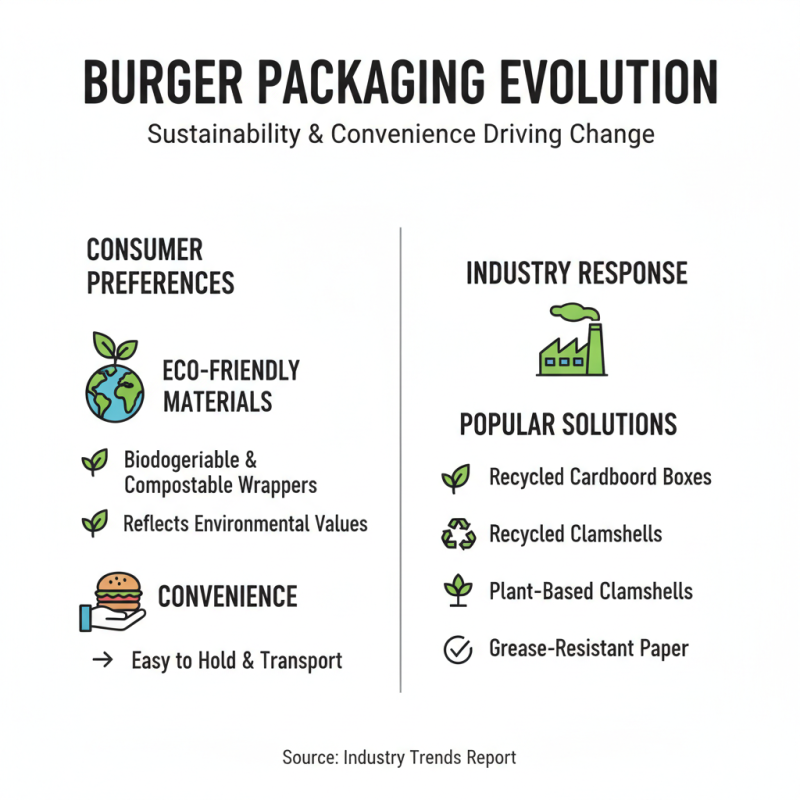
As consumer preferences evolve, burger packaging is increasingly influenced by sustainability and convenience. A growing number of customers seek eco-friendly materials. Biodegradable and compostable wrappers are becoming more popular. Many consumers are now aware of their environmental impact. They prefer packaging that reflects their values.
Visual appeal is also significant. Creative designs and vibrant colors attract attention. Packaging that tells a story enhances consumer connection. Many burgers now come in unique shapes or box styles. This creativity helps brands stand out on crowded shelves. Yet, some designs sacrifice functionality, causing challenges in the user experience.
Moreover, the demand for customization is rising. Consumers want to personalize their meals. Yet, increased options may complicate packaging logistics. It's a delicate balance between catering to preferences and maintaining practicality. Businesses must rethink their strategies to meet these demands. Addressing these challenges is crucial for success in the competitive market.
As the burger industry evolves, regulatory changes heavily influence packaging practices. Governments are increasingly focused on sustainability. Plastic bans are becoming common. In 2022, 40% of U.S. states enacted stricter regulations on single-use plastics. This shift pushes businesses to rethink their packaging materials.
The rise of compostable and recyclable packaging is a direct response to these regulations. Research shows 58% of consumers prefer environmentally friendly packaging options. A significant gap exists, however. Many brands struggle to find sustainable materials that still maintain food safety standards. Some suppliers are not yet ready to meet this demand.
Cost is another concern. Sustainable packaging might come with higher production expenses. According to industry data, 35% of companies report increased costs when switching to compliant materials. While regulatory changes drive innovation, they also create hurdles. The balance between compliance and cost-efficiency is a challenge for many in the industry.