How to Buy Freeze Dried Peaches in Bulk?
Buying Freeze-Dried Peaches in bulk can reduce repeat orders, but a low price alone does not make a good purchase. The right choice depends on how you will use them, how quickly you can use them, and whether the supplier provides clear product details. A bakery may need uniform slices for toppings, while a snack maker may prefer smaller pieces that blend easily into mixes. Check the ingredient list, cut size, color, and stated shelf life before comparing quotes. Small details matter.
Ask for a sample before placing a large order. Check whether the peaches stay crisp, smell clean and fruity, and arrive with little powder or breakage. Review the packaging, too. A sealed, moisture-resistant bag helps protect texture during storage, though it cannot compensate for poor handling. Request the lot information and available quality documents, and verify any certifications directly rather than relying on a logo alone. Compare the cost per usable pound, including shipping and expected waste, not just the quoted unit price.
Start with a manageable quantity. Bulk is not always cheaper if cartons sit unused or lose quality after opening. Confirm minimum order size, lead time, storage guidance, and the supplier’s process for addressing damaged shipments. Then test the peaches in your actual recipe or production line. Results can differ from a sample. Keep that in mind. A careful buying plan balances price, consistency, and practical storage, while leaving room to reassess the supplier after the first delivery.
Define Your Bulk Needs and Intended Uses
Before requesting a quote, define what the peaches must do. Will they top cereal, blend into snack mixes, or soften in baked goods? Each use needs a different cut, texture, and pack size. Whole pieces look appealing in jars, while smaller pieces distribute more evenly through granola.
Plan from the finished product, not fresh-fruit weight. USDA FoodData Central lists raw yellow peaches as about 88.9% water by weight. Freeze-drying removes most moisture, so a small pouch can represent much more fresh fruit than it appears to contain. That comparison is only a planning aid; varieties, slicing, and processing affect the final yield. Check a supplier’s specification sheet for piece size, moisture level, and net weight.
Estimate a normal week of use, then multiply by your purchase interval. A bakery using 2 kilograms weekly needs a different order from a household adding a handful to breakfast. Consider storage too: opened packs can lose crispness in humid kitchens. Start with a sample, if possible. Test it in the actual recipe. I would still allow a modest buffer; real kitchens rarely follow the spreadsheet exactly. Ask whether bulk packs can be resealed, and confirm the stated shelf life after opening.
Compare Peach Formats, Quality, and Product Specifications
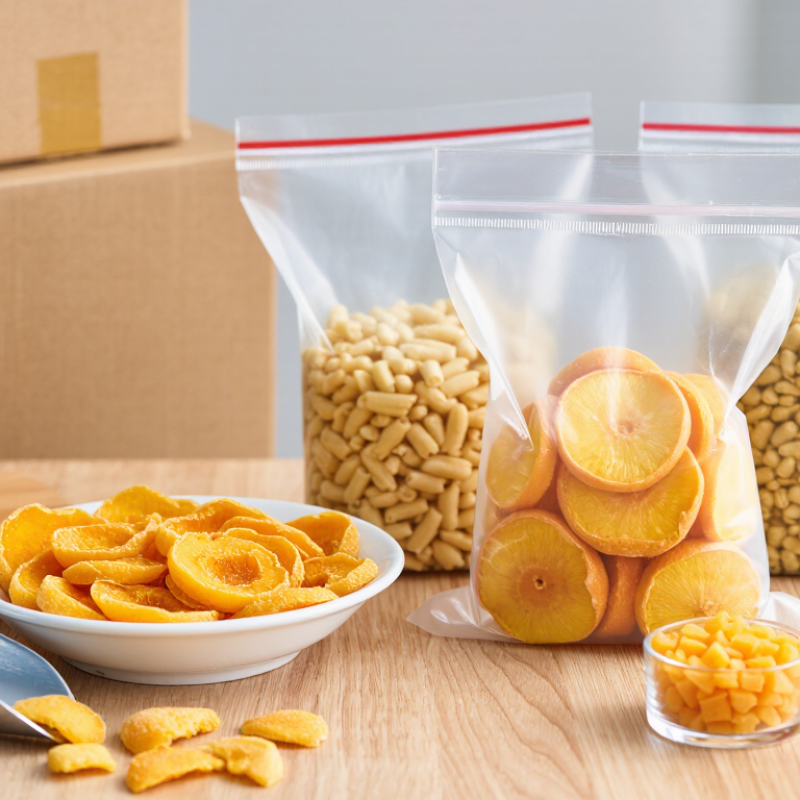
When buying freeze-dried peaches in bulk, compare the format with how you will use it. Slices suit toppings and snack packs; dices blend into granola; powder mixes into batters but can clump after opening. Check the stated piece size and the percentage of fines. A carton may look generous, yet broken pieces can dominate.
Use fresh fruit as a reference, not a direct equivalent. USDA FoodData Central reports raw peaches contain about 88.9 grams of water and 39 calories per 100 grams. Freeze-drying removes much of that water, concentrating fruit by weight and changing texture. USDA Agricultural Marketing Service grade standards cover frozen peaches, not freeze-dried peaches, so do not assume frozen-fruit grades certify dried products.
Ask suppliers for a current specification sheet and lot-specific certificate of analysis. Compare residual moisture, water activity, microbial results, ingredient statement, pack date, and net weight. There is no single moisture figure that proves every batch will stay crisp; packaging and storage matter too. Check whether the pouch is moisture-barrier material, and request a sample before committing. Crunch matters. I would also inspect the bottom of the sample bag: a little powder is normal, but excessive dust may signal rough handling—or simply a format poorly suited to your recipe.
Evaluate Suppliers, Certifications, and Bulk Pricing
When buying freeze-dried peaches in bulk, compare suppliers on evidence, not polished sales language. Ask for a recent sample and inspect the color, aroma, slice size, and amount of powder at the bottom of the pouch. A clean peach scent and crisp texture are useful signs, though they cannot replace testing. Request a lot-specific certificate of analysis showing moisture and microbiological results. Check that the document matches the product and production lot being quoted.
Certifications should fit your needs and the product’s intended use. Ask for current food-safety certificates, then verify their scope, facility address, and expiration date with the issuing organization. If you need organic peaches, confirm that the certificate covers the product and relevant handling steps. Ask about allergen controls, traceability, and how the supplier handles damaged or inconsistent lots. Paperwork helps, but it is not a guarantee. A small mismatch in the certificate details deserves a question, not an assumption.
Compare bulk pricing by delivered cost per usable kilogram, not just the quoted price. Include freight, duties where applicable, packaging, minimum order quantity, and any storage requirements. Peaches with more broken pieces may cost less but work poorly for retail packs or visible toppings. Ask whether pricing changes by order size and how long the quote remains valid. Get packaging specifications in writing, including barrier protection and resealing options. It is easy to focus on the lowest number; I would pause if the supplier cannot explain what that number includes.
Review Samples, Packaging, Shelf Life, and Shipping Terms
How to Buy Freeze Dried Peaches in Bulk?
Request samples before committing to a large order. Check whether the slices look evenly dried, with a natural peach aroma and little loose powder. Taste a few pieces plain, then add them to yogurt or cereal to see how they hold up. Ask for the product specification, ingredient statement, lot identification, and any available quality or test documentation. A glossy sample can look convincing; texture matters more.
Tips: Compare samples from the same harvest or lot when possible. Ask how samples were stored. Record what you notice, even if the notes seem fussy.
Packaging and shelf life deserve close attention. Confirm the bag material, seal type, net weight, and whether larger cases contain moisture-resistant inner bags. Ask how long the peaches remain in specification, and whether that period starts at production or packing. Check the storage instructions and date coding. Once opened, a large bag may be inconvenient; plan smaller portions and reseal them promptly. I would not assume every package protects equally well. Get the details in writing.
Before paying, clarify shipping terms: who arranges freight, who pays, the estimated delivery window, and how damage or delays are handled. Ask whether cartons need special handling during transit and how shortages should be reported. Confirm the delivery address and unloading requirements, too. Small details matter.
Place Your Order and Confirm Delivery and Storage Requirements
Before ordering bulk freeze dried peaches, confirm the exact pack size, peach form, and product specifications in writing. Ask for the lot number and best-by date, so your team can track stock and rotate it properly. I once focused too much on the price per case. That missed a practical issue: a large shipment can overwhelm limited storage space.
Agree on the delivery window, receiving hours, and shipping method before payment. Ask how the peaches are protected from crushed cartons and moisture during transit. Freeze dried fruit is light but fragile. A damp or torn inner pouch can affect its crisp texture. Confirm what to do if cartons arrive damaged, and keep the order confirmation for reference. Small details matter.
Plan storage before the truck arrives. Choose a clean, dry area away from ovens, sinks, and direct sunlight. Check the package label for the supplier’s storage guidance; after opening, reseal the pouch tightly or use an airtight container. Keep the first shipment modest if you are unsure how quickly your kitchen or shop will use it. That may cost slightly more per pound, but it can reduce waste. Bulk buying is not always the cheapest choice in practice.