
China Best Machine Vision Inspection Solutions for Quality Control?

In today’s rapidly evolving manufacturing landscape, Machine Vision Inspection has become crucial for quality control. Dr. Emily Chen, a leading expert in the field, states, "Machine vision systems are the eyes of modern production." Industries invest heavily in these technologies to enhance accuracy and efficiency. Yet, challenges remain.

For instance, many companies struggle to integrate Machine Vision Inspection systems into their existing processes. Gaps in training and technology can lead to underperformance. Moreover, inconsistent lighting and varying surface textures complicate inspection tasks. These factors emphasize the need for a tailored approach.

Implementing Machine Vision Inspection is not just about technology. It involves understanding human capabilities and responding to evolving challenges. Effective collaboration between machines and operators is vital. By acknowledging imperfections, manufacturers can innovate and improve their inspection systems. This ongoing journey shapes the future of quality control.
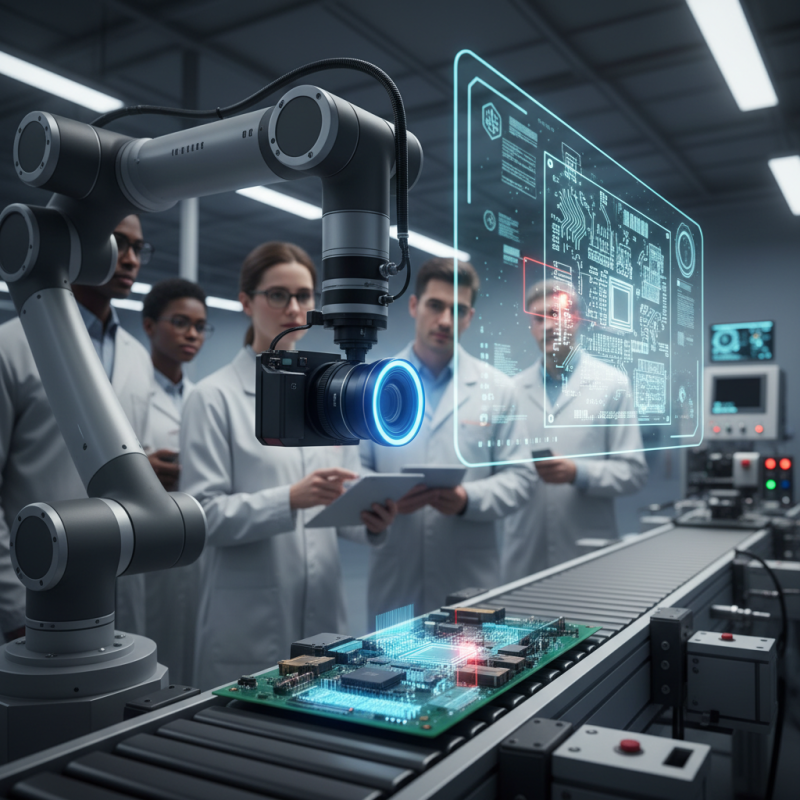
China Best Machine Vision Inspection Solutions for Quality Control?

Overview of Machine Vision Inspection in China

Machine vision inspection has gained significant traction in China, evolving rapidly in recent years. This technology uses cameras and artificial intelligence to inspect products. Many industries rely on it to ensure quality control. It enhances accuracy by capturing minute details. This precision reduces human error, which is often costly.

However, the integration of machine vision systems is not without challenges. The initial setup can be complex and costly. Training staff to operate these systems requires time and resources. Additionally, there are issues related to software calibration and maintenance. Some users find the automation intimidating; others struggle with system integration.

Despite these hurdles, the benefits are substantial. Companies across sectors report improved efficiency. Yet, not every implementation achieves success. Learning curves can be steep, and systems may malfunction unexpectedly. Continuous refinement in processes is essential for optimizing outcomes. Ultimately, the journey toward effective quality control through machine vision is ongoing.

Machine Vision Inspection Solutions in China - Quality Control Insights

Key Technologies Driving Machine Vision Solutions

Machine vision is transforming quality control. Key technologies shape these solutions. According to recent industry reports, the global machine vision market is expected to reach $14 billion by 2026. This growth is driven by advancements in artificial intelligence, deep learning, and camera technology. These innovations enable high-speed inspections with remarkable accuracy.

AI algorithms are crucial for defect detection. They analyze images quickly, flagging anomalies that human inspectors might miss. A study from a leading research firm showed that AI can improve inspection accuracy by up to 90%. However, the integration process is not without challenges. Companies often struggle with data management and system complexities. Ensuring that the AI models learn from diverse data sets requires ongoing effort and resources.

Camera technology also plays a significant role. High-resolution cameras capture fine details, essential for identifying defects. The shift towards 3D imaging enables more comprehensive assessments. Yet, many organizations lack the expertise to fully leverage these capabilities. They find themselves at a crossroads, needing to invest in training and infrastructure. The pursuit of quality through machine vision can lead to success but demands reflection on implementation strategies.

China Best Machine Vision Inspection Solutions for Quality Control

Technology Type Key Features Industry Applications Adoption Rate (%)
2D Vision Systems High-speed inspection, Error detection, Image processing Electronic components, Food packaging, Medical devices 75%
3D Vision Systems Depth perception, Surface modeling, Real-time analysis Automotive, Robotics, Packaging 60%
Infrared Imaging Temperature profiling, Thermal analysis, Non-destructive testing Electronics, Building inspection, Food safety 55%
Laser Scanning Precision measurement, Quality assurance, 3D mapping Manufacturing, Construction, Aerospace 45%
Machine Learning Integration Automated defect recognition, Predictive maintenance Electronics, Pharma, Textiles 30%

Applications of Machine Vision in Quality Control

Machine vision technology is transforming quality control across various industries. This technology uses cameras and software to analyze products at a high speed. Reports indicate that the machine vision market is expected to grow to over $12 billion by 2025. This growth reflects its increasing importance in ensuring product quality.

In manufacturing, machine vision inspects items for defects. It checks dimensions, colors, and surface quality. A study shows that over 70% of manufacturers using this technology reported fewer defects. However, integration challenges still exist. Sometimes, systems require adjustments and fine-tuning, leading to delays.

Applications go beyond traditional manufacturing. In the food industry, machine vision can detect packaging flaws and ensure proper labeling. Yet, there are concerns about its adaptability to varied products. Variability in product shapes and colors can affect inspection accuracy. Continuous training of the systems is vital for consistent results. This highlights the dynamic nature of machine vision in quality control.

Top Suppliers of Machine Vision Systems in China

When it comes to quality control, machine vision systems in China are making impressive strides. These systems play a vital role in ensuring product quality across various industries. The technology can identify defects on production lines, enhancing efficiency and reducing waste. Imagine a system that detects even the tiniest scratch on a surface. It's fascinating how technology has advanced, but there are still limitations to consider.

Several suppliers in China specialize in machine vision systems. They offer a range of solutions tailored to different industries. These suppliers provide customizable options to meet specific needs. However, not all solutions are perfect. Some users report challenges in system integration or compatibility with existing machinery. This highlights the importance of thorough testing before full implementation.

Moreover, the rapid pace of technological development means suppliers must constantly innovate. New features, like improved image processing capabilities, are always on the horizon. Yet, this constant evolution can create uncertainty. Companies may hesitate to invest in the latest systems, fearing obsolescence soon after purchase. A balance between innovation and stability is crucial as we navigate this dynamic market.

Future Trends in Machine Vision Inspection Technology

The future of machine vision inspection technology is promising. According to a recent industry report, the global machine vision market is projected to reach over $12 billion by 2026. This growth highlights the increasing reliance on automated quality control systems. These systems scan products with high precision, detecting defects that the human eye might miss.


Artificial intelligence plays a key role in this evolution. AI systems enhance image processing, reducing false positives in defect detection. Yet, challenges remain. For instance, integrating AI with legacy systems can lead to compatibility issues. Additionally, training AI algorithms requires extensive, high-quality datasets. A study indicated that up to 30% of machine vision systems suffer from inadequate training data, impacting their effectiveness.


Emerging technologies like 3D imaging and multi-spectral analysis are on the rise. These advancements improve inspection capabilities for complex products. Businesses must weigh investment costs against potential returns. Not every organization is ready for such a shift. A report shows that roughly 40% of manufacturers hesitate to adopt new systems due to high initial costs. Overall, while the future is bright, challenges and reflections in implementation will shape the path ahead.