How to Choose the Right Packing Machine for Your Business?
Choosing the right Packing machine is crucial for any business. A well-suited packing machine can enhance efficiency and reduce labor costs. However, this decision requires careful consideration of various factors.
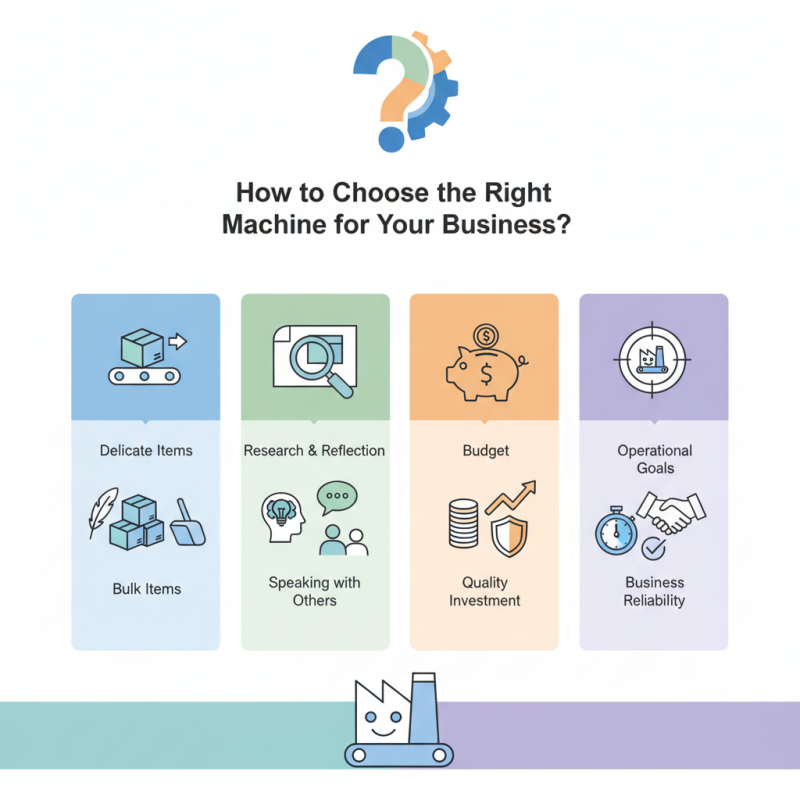
Different packing machines offer unique features. Some cater to specific industries, while others are more versatile. Understanding your product's needs is essential. For example, delicate items may require gentle handling. In contrast, bulk items might need robust machinery.
It’s easy to overlook details in this process. Research is vital, but so is reflection on past experiences. Speaking with other business owners can provide valuable insights. Be mindful of your budget too. Investing in quality equipment can pay off in the long run. Ultimately, the right packing machine should align with your operational goals and enhance your business's reliability.
Understanding Your Business Needs for a Packing Machine
Choosing the right packing machine for your business requires a deep understanding of your specific needs. Different industries have unique packing requirements. For instance, the food industry requires machines that meet hygiene standards. According to a 2022 report by MarketsandMarkets, the global packaging equipment market is expected to reach $41 billion by 2027, underlining the importance of choosing wisely.
Assess your production volume. High-demand businesses may benefit from semi-automated or fully automated solutions. These machines can increase efficiency and reduce labor costs. A study by PMMI highlights that up to 70% of manufacturers saw a 50% increase in output after upgrading their packing systems. However, consider your budget. Some businesses overspend on features they don’t use.
Gather input from your team. They know the nuances of your current processes. A machine should simplify workflows, not complicate them. Look for versatile options. If your products change frequently, flexibility is key. Data shows that nearly 30% of companies regret their packing machine choices due to misalignment with evolving needs. Reflect on these factors to make an informed decision.
Evaluating Different Types of Packing Machines Available
When selecting a packing machine, understanding the available types is crucial. Each machine serves a unique purpose based on the product type, packaging material, and production volume. For instance, vertical form-fill-seal machines are ideal for loose items like snacks and powders. They offer rapid packaging speeds, but efficiency can vary with different materials. In contrast, horizontal flow wrappers are suited for packed products, providing protection and extending shelf life. According to a 2023 report by Smithers Pira, the demand for flexible packaging solutions has increased by 4.2% annually, highlighting the trend towards adaptability in packing machinery.
The choice of a packing machine also involves assessing production goals. Semi-automatic machines require manual interventions but are less costly. Automated solutions, however, can significantly boost productivity. A recent industry analysis revealed that companies using automated systems saw productivity improvements of up to 30%. While automated machines often yield higher initial investments, the long-term savings on labor can be substantial.
Nevertheless, businesses should remain cautious. Integrating a new machine can disrupt existing workflows, requiring careful planning and staff training.
Lastly, maintenance and service availability are critical factors in your decision. Machines with higher complexities often demand more frequent maintenance, which could lead to downtime. It’s vital to weigh your capacity for technical support against potential operational challenges. A comprehensive evaluation of these facets can better align the selected machine with your operational needs. The industry's dynamic nature means even well-chosen equipment may require adaptations over time.
Comparing Features and Specifications of Packing Machines
Choosing the right packing machine for a business is a crucial decision. It impacts efficiency, cost, and product safety. When comparing features, several specifications should be top of mind. For instance, consider the production speed. A faster machine can boost output but may increase errors. Balance is key.
Next, evaluate the type of packaging materials. Some machines handle flexible packaging, while others are designed for rigid containers. Material compatibility is essential. Poor choices can lead to product wastage. It’s essential to assess weight limits, as well. Heavier items require robust machines.
Automation features are another critical area. Fully automated machines reduce labor costs but can be complicated. Manual options may provide flexibility but require more workforce. Evaluating your specific needs is important. Paying attention to maintenance requirements also cannot be overlooked.
Complex machines might demand frequent maintenance, affecting productivity. Balancing features and your operational needs will guide you toward the best choice.
Assessing Budget and Cost-effectiveness of Packing Solutions
When assessing the budget for a packing machine, consider the initial cost versus the long-term savings. A higher upfront investment may lead to better efficiency. Look at the specifications and features that align with your product. For example, machines with faster speeds can reduce labor costs. However, they may require more maintenance, affecting overall expenses.
Evaluate the total cost of ownership, which includes energy consumption, maintenance, and spare parts. A machine that is cheap to buy might end up costing more over time due to high electricity usage. It’s essential to calculate the return on investment (ROI) by analyzing how much time and money the machine saves. This can clarify whether a particular model truly fits your budget.
Don’t forget to include flexibility in your evaluation. If your business scales, you need a packing solution that adapts. Upgrading a machine later can be more costly than selecting a versatile model today. Balance your immediate budget constraints with future needs. Reflect on making a choice that supports both current and future operations.
Finding a Reliable Supplier for Your Packing Machine Needs
Choosing a reliable supplier for your packing machine is essential for your business. According to a recent industry report, 70% of companies emphasize the importance of supplier reputation. Quality machines can improve efficiency significantly.
When evaluating suppliers, consider their experience in the industry. A supplier with over a decade of experience can provide insights into machine performance and maintenance. Check their certifications too. For instance, certifications like ISO 9001 ensure adherence to quality management standards.
Communicate openly with potential suppliers about your specific needs. Ask for references from other customers. A good supplier should be willing to share their success stories and challenges faced. Reflect on how your needs may change in the future. Flexible suppliers can adapt their offerings to meet evolving business demands. Explore their customer support. A strong support system can save significant downtime.
How to Choose the Right Packing Machine for Your Business?
| Feature | Description | Considerations |
| Type of Packaging | Identify whether the machine is suited for bags, boxes, or bottles. | Consider your product dimensions and packaging requirements. |
| Production Speed | Look for machines that can keep up with your production needs. | Choose a speed that aligns with demand forecasts. |
| Automation Level | Decide between manual, semi-automatic, or fully automatic machines. | Evaluate labor costs and desired efficiency. |
| Size and Footprint | Consider the space available in your facility. | Measure to ensure it fits well in your production layout. |
| Maintenance Requirements | Check how often the machine needs servicing. | Choose machines with easy maintenance and support. |
| Cost | Evaluate the initial purchase price and operating costs. | Look for a balance between budget and features. |
| Supplier Reliability | Research the reputation of the machine supplier. | Check reviews and ask for references. |