What Is Folding Carton Packaging and How Is It Used?

Folding carton packaging is a lightweight paperboard container produced by printing, cutting, creasing, and folding flat sheets. It appears on supermarket shelves as cereal boxes, cosmetic cartons, medicine packs, and small consumer-product boxes. Unlike rigid boxes, it usually arrives flat, saving warehouse space and reducing transport volume. That simple detail matters when thousands of cartons move through a distribution center each day.

Industry reports show why this format remains important. Smithers’ market analysis, The Future of Folding Cartons to 2028, identifies food, beverages, healthcare, personal care, and household products as major demand sectors. Pro Carton’s European carton industry reports also track continued investment in print quality, recyclable board, efficient production, and responsible sourcing. These trends reflect practical pressures, not fashion alone. Brands want strong shelf visibility, clear product information, and packaging that supports automated filling lines.

The structure is deceptively simple.

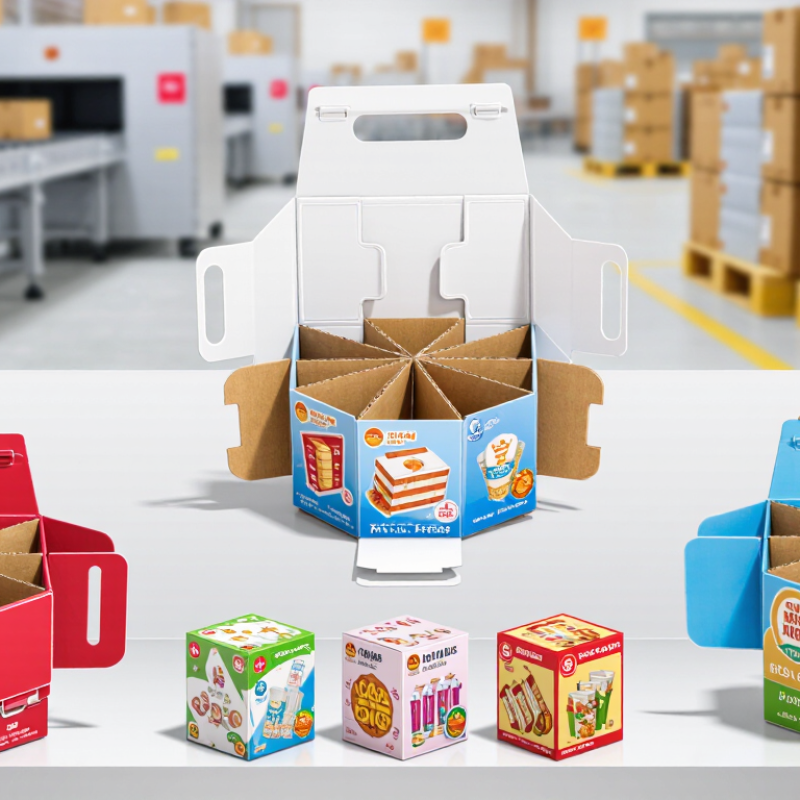
A carton may include reverse tuck flaps, locking tabs, window patches, or internal dividers. Its paperboard grade must match the product’s weight, moisture exposure, printing needs, and protection requirements. A small carton for tablets needs different performance from a larger frozen-food box. The wrong specification can cause crushed corners, poor closing, or waste during packing. That weakness deserves attention. Folding carton packaging is not automatically the most sustainable choice; material selection, coatings, inks, transport distance, and local recycling systems all influence its impact. This guide explains how the format works, where it is used, and which design decisions deserve closer professional review.
What Is Folding Carton Packaging and How Is It Used?

Define Folding Cartons: 200–600 gsm Paperboard Formats (ECMA)

Folding cartons are paperboard packs made by printing, creasing, die-cutting, folding, and gluing flat sheets. Under ECMA guidance, common folding carton formats use paperboard from 200 to 600 gsm.

GSM means grams per square metre. Lower weights suit lightweight sleeves and small retail packs. Heavier grades provide stronger walls, sharper edges, and better protection for larger products.

The final choice depends on panel size, filling speed, stacking height, and humidity exposure.

ECMA format guidance helps converters describe carton structures consistently, from simple tuck-end boxes to more complex locking designs. A 350 gsm carton may feel rigid in a sample room but soften near chilled products. That detail is easy to miss. Die-cut windows, embossing, and deep creases can also reduce strength around corners. Practical testing matters more than board weight alone.

Industry data shows why this format remains important. CEPI reported about 90.6 million tonnes of paper and board production in Europe in 2023, supporting a broad converting infrastructure. Smithers’ folding carton market analysis also identifies continued demand through 2028, driven by retail presentation, efficient transport, and paper-based packaging development.

In production, a converter may test compression, crease recovery, print coverage, and glue performance before approval. The carton must open cleanly, hold its shape, and run reliably on packaging equipment. Sometimes, the most attractive prototype is not the best production carton.

Map the Four Core Production Stages: Printing, Cutting, Folding, and Gluing

What Is Folding Carton Packaging and How Is It Used?

Map the Four Core Production Stages: Printing, Cutting, Folding, and Gluing

Folding carton packaging is made from paperboard scored for controlled bending. It protects products such as food, cosmetics, household goods, and small retail items. The carton usually ships flat, saving storage space and transport volume. Its surface also carries instructions, product details, and visual information for shoppers.

Printing sets the carton’s appearance and readable content. Operators choose inks, board surfaces, and color controls according to the product and press conditions. Registration must stay accurate across panels. A slight shift can make text look careless. After printing, die-cutting shapes the blank and creates crease lines, tabs, and openings. Cutting pressure needs regular checks because damaged fibers can weaken later folds. This stage is less simple than it looks.

Folding and gluing turn the flat blank into a usable carton. Folding rails guide each panel along its scored lines, while adhesive is applied to selected tabs. Pressure and timing help the bond hold during packing and handling. Moisture, board grain, and machine speed can still change the result. In production, a carton may pass inspection yet fold poorly on a faster line. That is why practical trials matter. Inspectors check dimensions, print clarity, glue placement, and easy opening. Small adjustments often prevent larger waste.

Classify Folding Carton Uses Across Food, Pharma, Cosmetics, and Retail

What Is Folding Carton Packaging and How Is It Used?

Folding cartons are lightweight paperboard packages, creased, printed, and shipped flat. Converters usually select board by product weight, moisture exposure, and required stiffness. Grand View Research estimated the global folding carton market at about USD 145 billion in 2023, with steady growth through 2030.

Food uses emphasize barrier protection and efficient shelf display. A cereal carton needs compression strength, clean folding, and readable nutrition information. Frozen meals may require moisture-resistant coatings. Folding cartons also support portion packs, sleeves, and multipacks. Still, paperboard alone cannot solve every freshness problem. That limitation matters.

Pharmaceutical cartons prioritize traceability, tamper evidence, and precise leaflet retention. Small locking tabs and internal fittings can prevent movement during transport. Cosmetics packaging often uses premium finishes, embossed textures, and compact inserts. The visual surface sells the product before opening.

Retail packaging combines all these demands with hanging tabs, windows, and barcode space. According to Smithers’ folding carton industry analysis, premium graphics and sustainability requirements remain important growth drivers. However, excessive coatings can weaken recyclability claims. PMMI packaging reports also identify automation and right-sized formats as continuing manufacturing priorities.

In practice, the best carton is not always the most decorated one. A slightly imperfect prototype can reveal crushed corners, loose closures, or unreadable panels before mass production.

Measure Pack Performance Through Caliper, Barriers, Compression, and Shelf Life

What Is Folding Carton Packaging and How Is It Used?

Folding cartons protect products while presenting a measurable engineering system. Caliper is the first checkpoint. Measure board thickness under TAPPI T 411 conditions, not with a casual ruler. A 0.018-inch board may fold cleanly, yet lose stiffness after scoring, printing, or humidity exposure. Test compression after converting. TAPPI T 804 or ASTM D4577 can reveal panel buckling and corner collapse. Small failures become expensive during stacking.

Barrier performance needs product-specific evidence. ASTM F1249 measures water vapor transmission, while ASTM F1927 measures oxygen transmission through paper-based structures. A dry snack may need moisture protection; a fatty product may need grease resistance instead. There is no universal barrier value. That sounds obvious, but projects still treat “coated” as a complete specification. It is not. Include seal integrity, coating weight, and humidity conditioning in the test plan.

Shelf life should combine accelerated and real-time studies. Temperature-based predictions can help, but Q10 assumptions may exaggerate stability. Compare package samples after transport vibration, compression, and storage. The U.S. EPA’s 2018 Facts and Figures report recorded 67.4 million short tons of paper and paperboard packaging waste, with 46.8 million tons recycled. Better performance can reduce damaged units and unnecessary replacement packaging. However, recyclability claims still require checking the actual coating and local recovery system. A carton can look efficient and fail quietly.

What Is Folding Carton Packaging and How Is It Used? — Measure Pack Performance Through Caliper, Barriers, Compression, and Shelf Life

Typical Application Common Board Type Typical Caliper Typical Basis Weight Barrier Requirements Compression Performance Expected Shelf-Life Contribution Key Verification Methods
Dry foods and cereals Folding boxboard or solid bleached board with a printable coated surface 0.40–0.60 mm
Suitable for moderate stiffness and retail presentation
250–400 g/m² Usually requires grease resistance and moderate moisture protection. Oxygen protection is added when the product is oxidation-sensitive. Typical package compression target: 0.5–1.5 kN
Actual results depend on carton dimensions, creasing, closure design, and stacking orientation.
Protects the primary package from abrasion, light, and handling damage. It normally does not provide the complete shelf-life barrier by itself. Caliper test, grammage test, Cobb water absorption, grease-resistance test, compression test, and simulated distribution testing
Pharmaceutical and healthcare cartons High-quality folding boxboard or solid bleached board with controlled surface finish 0.45–0.70 mm
Selected for stiffness, print quality, and tamper-evident features
300–450 g/m² Light and moisture protection may be required. Barrier performance is commonly provided by an inner blister, pouch, foil, or coated layer. Typical compression target: 0.6–1.8 kN
Higher stiffness is often required for automated packing and transport.
Helps preserve package integrity and legibility throughout the labeled storage period. The product's primary container remains the main protective barrier. Caliper, edge-crush or stiffness testing, carton compression, drop testing, print rub testing, and seal or closure inspection
Cosmetics and personal-care products Coated folding boxboard, solid bleached board, or laminated paperboard 0.40–0.80 mm
Thicker board may be used for premium appearance and structural rigidity
280–500 g/m² Usually requires resistance to scuffing, oils, fragrances, and moderate humidity. Decorative coatings may improve surface durability but are not automatically food-safe. Typical compression target: 0.5–1.6 kN
Performance is strongly influenced by window cut-outs, embossing, and internal fit.
Primarily protects the product from cosmetic damage, dust, light, and handling. Moisture or oxygen control generally comes from the primary container. Caliper, bending stiffness, scuff resistance, rub resistance, compression, humidity conditioning, and visual inspection
Frozen food Moisture-resistant coated paperboard or laminated folding carton board 0.45–0.70 mm
Board selection should account for condensation and low-temperature handling
300–450 g/m² High moisture resistance is required. Coatings or laminations help reduce water uptake, ink migration, and loss of stiffness. Typical compression target after conditioning: 0.6–1.5 kN
Wet and cold conditioning can substantially reduce compression strength.
Helps maintain carton shape during freezing, thawing, condensation, and refrigerated distribution; it is not a substitute for a sealed primary pack. Cobb test, water-vapor transmission testing where applicable, cold-temperature conditioning, wet compression, and drop testing
Bakery and confectionery Food-contact-grade folding boxboard with grease-resistant coating or inner liner 0.35–0.60 mm
Chosen to balance folding performance, presentation, and product protection
250–400 g/m² Grease resistance is important for fatty foods. Moisture or oxygen barriers may be required for crispness, aroma, or oxidation control. Typical compression target: 0.4–1.2 kN
Internal dividers and product fit can improve resistance to panel collapse.
Helps limit light exposure, contamination, and physical damage. The required shelf life is normally determined by the inner wrapper or liner. Grease-resistance testing, Cobb test, seal or liner inspection, compression testing, and package integrity testing
Dry household and consumer goods Recycled folding boxboard, coated recycled board, or solid bleached board 0.45–0.75 mm
Recycled grades may require additional caliper to achieve equivalent stiffness
300–500 g/m² Barrier needs vary widely. Moisture, dust, abrasion, and odor resistance may be specified according to the product. Typical compression target: 0.6–2.0 kN
Larger panels and heavier contents generally require stronger board or structural reinforcement.
Primarily supports mechanical protection, cleanliness, product identification, and resistance to warehouse handling. Caliper, ring-crush or stiffness testing, compression, vibration, drop, and accelerated humidity conditioning
Liquid-compatible secondary cartons Coated or laminated paperboard used around a sealed bottle, pouch, or carton 0.50–0.80 mm
Higher caliper may be needed to control deformation around heavy contents
350–550 g/m² The secondary carton may need splash and humidity resistance. Liquid containment must come from the sealed primary package. Typical compression target: 0.8–2.0 kN
Bottom-lock structure, glue quality, and load distribution are critical.
Helps protect against scuffing, light, and handling damage. It should not be treated as the primary leak or oxygen barrier. Compression, bottom-lock strength, glue-bond inspection, humidity conditioning, leak testing of the primary package, and drop testing

Note: The numerical ranges are indicative engineering ranges for folding-carton development, not universal specifications. Final performance depends on board grade, fiber composition, coating or lamination, carton dimensions, crease geometry, closure style, loading pattern, humidity, temperature, and distribution conditions. Shelf life must be validated with the complete product-package system, including the primary container and any inner barrier.

Assess Sustainability: Over 80% of European Paper Packaging Was Recycled in 2023 (CEPI)

Folding carton packaging is a paperboard container supplied flat and assembled by folding scored panels. It protects products during storage, transport, and retail display. Common uses include food, medicines, household goods, and personal care items. Its smooth surface also supports detailed printing, product instructions, and recycling information.

Sustainability deserves closer attention. More than 80% of European paper packaging was recycled in 2023, according to CEPI. That result is encouraging. However, the figure does not mean every carton returns successfully to the recycling stream. Collection systems, sorting quality, moisture, food residue, inks, and coatings can change the outcome. A clean, mostly fiber-based carton is generally easier to process than one with heavy plastic layers or contamination.

In a practical packaging review, I would inspect the carton after normal use, not only in a factory sample. Can the customer empty it completely? Does the carton stay rigid on a damp shelf? Are recycling instructions visible and understandable? These details matter. A thinner board can reduce material use, but it may tear during transport and create more waste. I would also question decorative finishes that add complexity without protecting the product. The recycling statistic is valuable evidence, yet it should support careful design rather than replace it. Real sustainability remains imperfect and depends on everyday handling.