
How to Choose Thermal Paper Rolls 2 1 4 X 50 in 2026?

Choosing Thermal Paper Rolls 2 1 4 X 50 in 2026 means checking more than the label. A roll marked 2¼ inches wide and 50 feet long may still fail to fit a printer. Confirm the printer’s specified width, maximum roll diameter, and core size before ordering. A few millimeters can matter. Paper thickness also affects how much stock fits inside the printer and how smoothly it feeds.

Market growth offers useful context, not a shortcut to choosing a product. Grand View Research’s Thermal Paper Market Size, Share & Trends Analysis Report estimates the global market reached about USD 4.1 billion in 2023 and projects continued growth through 2030. That forecast does not guarantee consistent quality across suppliers. Ask for clear specifications, sample rolls, and details about print clarity and storage performance. Check whether the paper is designed for direct thermal printing, then test it in the actual receipt printer. Look for readable text, clean cutting, and no frequent feed errors. Small details matter.

Finally, consider how receipts will be stored and handled. Heat, sunlight, and friction can cause thermal images to fade, so paper suitability depends on the application. Request current product documentation, and compare stated roll length with the printer’s capacity. Some listings are vague. That deserves a second look. A careful fit check and a short print test are more dependable than choosing by price alone.
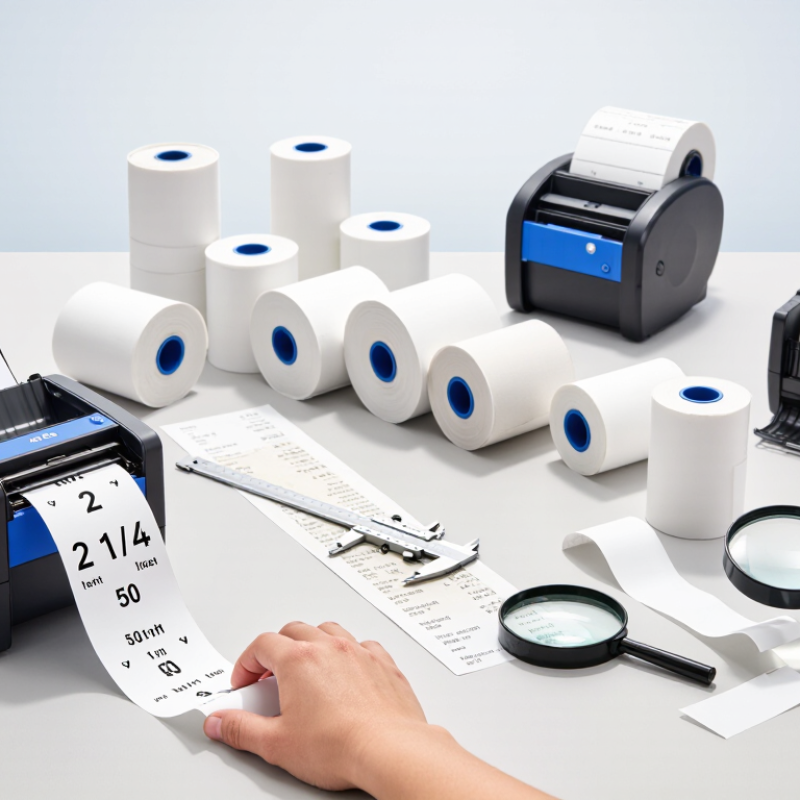
How to Choose Thermal Paper Rolls 2 1 4 X 50 in 2026?

Understanding the 2 1/4 x 50 Thermal Paper Roll Size

Understanding the 2 1/4 x 50 Thermal Paper Roll Size starts with reading the measurements correctly. The first number means the paper is 2.25 inches wide, or about 57 millimeters. The second indicates 50 feet of paper on the roll, not the roll’s diameter. That distinction matters. A roll can look compact but still hold a useful length of paper.

Before buying, check your printer’s manual or the label inside its paper compartment. The printer must accept the roll’s width, core size, and outside diameter. A 2 1/4-inch roll may fit the width requirement but still have a core that does not sit properly on the holder. Measure before ordering. Also check whether your printer uses direct thermal paper; it prints with heat and does not need an ink ribbon. Paper thickness and coating can affect feeding and print clarity, so compatibility is more than matching two numbers.

A 50-foot roll can produce different receipt counts depending on receipt length and printer settings. Short checkout slips use less paper than receipts with itemized details or promotional messages. The estimate is imperfect, and real usage varies. Keep one spare roll nearby and test a sample before buying a large quantity. A crisp, dark print should remain easy to read, while faded or patchy output may point to a paper or printer issue.

How to Choose Thermal Paper Rolls 2 1 4 X 50 in 2026? - Understanding the 2 1/4 x 50 Thermal Paper Roll Size

Dimension or Buying Factor What It Means What to Check Before Buying
Roll width 2 1/4 inches is a nominal width of 2.25 inches, or 57.15 mm. Check the printer’s specified paper width. A roll that is too wide may not fit, while one that is too narrow may feed or print incorrectly.
Paper length 50 feet is approximately 15.24 metres of paper, usually stated as a nominal roll length. Compare the stated length when estimating how often rolls may need to be replaced. Actual usage depends on receipt length and printing frequency.
Roll diameter The outside diameter is not determined by width and length alone. It also depends on paper thickness and the core size. Confirm the maximum roll diameter allowed by the printer’s paper compartment; do not assume every 2 1/4 x 50 roll has the same diameter.
Core size The cardboard core’s inside diameter can vary between rolls, even when the paper width is the same. Check the printer’s required core diameter and whether it needs a spindle, adapter, or specific core style.
Thermal compatibility Direct thermal paper develops an image when its coated surface is heated by a compatible printhead; it does not require an ink ribbon. Verify that the printer uses direct thermal printing. Thermal paper is not a substitute for paper designed for impact or ribbon-based printing.
Coated side and feed direction Thermal coating is on one side of the paper. Roll orientation affects which side meets the printhead. Use the printer’s loading instructions, then make a test print if needed. The correct orientation depends on the printer’s paper path.
Paper thickness and roll fit Paper caliper affects how much paper fits on a core and contributes to the roll’s outside diameter. Use the printer’s supported media specifications where available, especially for printers with a restricted paper compartment.
Print quality Thermal sensitivity, coating, printhead condition, and printer settings can all affect image darkness and readability. Test a roll in the intended printer and confirm that text and barcodes are clear at the required print settings.
Storage and handling Heat, direct sunlight, friction, and some chemicals can darken or fade thermal images. Store unused rolls in a cool, dry place away from direct sunlight and strong heat. Follow any storage guidance supplied with the paper.
Paper claims Statements such as BPA-free describe a material claim, not the roll’s size or printer fit. Check the seller’s product documentation for the exact claim and confirm the roll dimensions separately.

Checking Printer Compatibility and Core Dimensions

For 2 1/4 x 50-inch thermal rolls in 2026, confirm the printer accepts 57.15 mm paper width. A roll can fit the width slot yet fail at the spindle. Check the manual for core diameter and maximum roll diameter; common small-roll cores vary, so do not assume a half-inch core. Measure the cardboard tube and the roll’s full outside diameter. Small differences matter.

The 50-foot length describes paper on the roll, not its outside size. Paper thickness changes how much it holds. Check the printer’s loading diagram, too: the heat-sensitive coating must face the print head. A quick scratch on the paper can reveal the coated side; it darkens with friction. Still, that test is not a substitute for the device instructions.

Grand View Research’s Thermal Paper Market report valued the global market at about $4.3 billion in 2023 and projected 5.3% annual growth through 2030. That market estimate gives useful context, but it cannot confirm a roll will fit your machine.

Measure twice. A sample roll is often the simplest final check.

Comparing Paper Quality, Coating, and Print Clarity

For a 2 1/4 x 50 thermal roll, paper quality affects feeding as much as print appearance. Check that the roll width, length, and core fit the printer; a slightly loose core can wobble and skew the receipt. Smooth, evenly cut edges help the roll unwind cleanly. Small details matter. Thin or rough paper may feel economical, but it can produce pale text or leave more paper dust near the print head.

The coating turns heat into an image, so consistency matters. Look for a uniform surface without glossy patches, streaks, or pinholes. Uneven coating can make one line of a receipt dark and the next faint. A simple test is to print small text and a dense black block, then check both under ordinary indoor light. It is easy to focus too much on whiteness; brightness alone does not prove that the coating responds evenly.

Print clarity also depends on printer settings and storage. Set darkness only as high as needed, since excessive heat can blur fine characters and wear the print head faster. Keep rolls sealed and away from hot windows, damp shelves, and direct sunlight. Compare a sample after printing, not just the roll in its wrapper. A receipt that looks sharp today may still fade if left beside a warm register. I would check how the paper handles real use, even if that means revising an earlier choice.

Matching Roll Capacity to Your Daily Printing Needs

For a 2 1/4 x 50 thermal paper roll, the printed length is only part of the capacity question. Daily use depends on receipt length, print density, and how often the printer feeds paper between transactions. A café printing short order slips may use fewer inches per sale than a shop adding long itemized receipts. Small details add up.

Estimate your daily paper use by measuring a typical receipt and multiplying its length by the number printed in a day. Then compare that figure with the roll’s usable length. Leave a buffer for test prints, voided receipts, and unusually busy periods. The estimate will not be perfect. Paper can run out sooner than the average suggests.

Watch the printer for a few workdays. Note how many rolls it uses, and whether staff replace them during rushes. If a roll lasts only part of a shift, keeping spare rolls within reach may matter more than buying a larger case. Also check that the roll fits your printer’s compartment; the stated 50-foot length does not guarantee every roll loads smoothly. Store paper away from heat and moisture, since poor storage can affect print quality. A simple usage log can reveal patterns, though someone may forget to update it.

Reviewing Supplier Standards, Storage, and 2026 Pricing

For 2 1/4 x 50 thermal rolls, ask suppliers to state usable paper length, width tolerance, core diameter, roll diameter, and coating type on the specification sheet. Request a sample and test it in your printer: faint text, paper dust, or a loose winding can waste more than a small price difference. Check for consistent print darkness and a clear declaration of the paper’s chemical composition. ISO 9001 certification can indicate a documented quality system, but it does not guarantee every roll will perform well.

Storage affects print life. Keep cartons sealed in a cool, dry place, away from sunlight, heaters, plasticizers, and cleaning chemicals. Heat and humidity may darken or fade the image. For context, the U.S. EPA’s 2018 Advancing Sustainable Materials Management report estimated a 68.2% recycling rate for paper and paperboard overall; that figure does not specifically describe thermal receipts. Ask suppliers for product-specific recycled-content and disposal information instead. One weak spot in many purchasing checks: storage conditions are often left undocumented.

Tips: Compare 2026 quotes by cost per usable meter, not per roll. Include freight, core size, minimum order, and price validity. The U.S. Bureau of Labor Statistics tracks producer prices for paper products, but its index is not a retail quote; request dated, itemized offers before budgeting. Keep a few rolls from each shipment for side-by-side print and feed tests.

How to Choose Thermal Paper Rolls 2 1/4 × 50 in 2026

Nominal roll dimensions, converted to millimeters

A 2 1/4-inch-wide, 50-foot roll is approximately 57.15 mm wide and 15,240 mm long. Confirm width, maximum roll diameter, and core size against your printer before ordering. Store thermal paper in a cool, dry place away from direct sunlight, heat, and chemicals. There is no single universal 2026 price: compare current supplier quotes for equivalent specifications, order quantities, and shipping terms.