
How to Implement a Forklift Collision Detection System?

In today's busy warehouses, safety is crucial. Implementing a Forklift Collision Detection System can significantly reduce accidents. Jim Henderson, an industry expert, stated, "A well-designed detection system is an investment in safety."

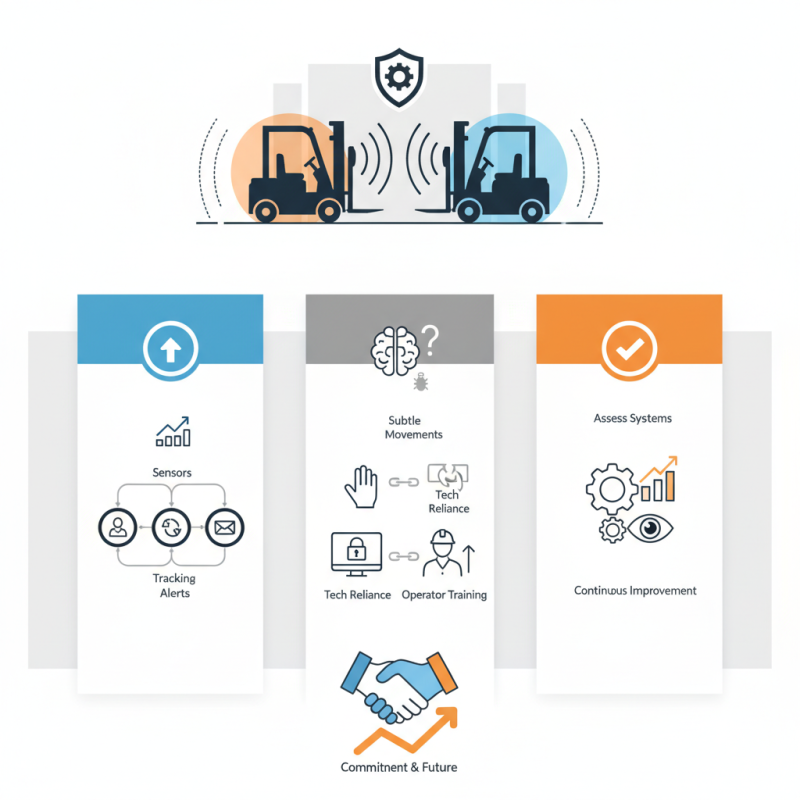
This technology uses sensors to track the movement of forklifts. It identifies potential collisions and helps operators react quickly. Yet, not all systems work perfectly. Some may miss subtle movements or rely too heavily on technology. Operators must also be trained effectively.

The benefits of a Forklift Collision Detection System are clear, but challenges remain. Companies must regularly assess their systems. Continuous improvement is necessary to keep everyone safe. Embracing this technology is essential, but it requires careful consideration and commitment.
How to Implement a Forklift Collision Detection System?

Understanding the Basics of Forklift Collision Detection Systems

Forklift collision detection systems are essential for workplace safety. These systems help prevent accidents involving pedestrians and other vehicles in warehouses and factories. A basic understanding of these systems includes their key components, such as sensors and alarms. Sensors detect nearby objects or individuals when a forklift is in operation. Alarms warn operators of potential collisions.

The effectiveness of these systems relies on their proper installation and maintenance. Sensors must be calibrated accurately to recognize objects of varying sizes. A malfunctioning sensor can lead to accidents. Regular checks and updates are necessary to ensure reliability. Training for employees is crucial; they should know how the system works and its limitations.

Despite advances in technology, challenges remain. Operators may become complacent, assuming the system will prevent all incidents. Human errors still occur, and it's essential to address these behaviors. Continuous improvement is needed in both technology and user training to maximize safety and efficiency.

Choosing the Right Technology for Collision Detection

Implementing a forklift collision detection system is crucial for enhancing safety in warehouses. Choosing the right technology is a key step. Sensor technologies, such as LiDAR and ultrasonic sensors, offer reliable solutions. Reports indicate that over 30% of forklift accidents involve collisions with other vehicles or pedestrians. Thus, effective technology selection can significantly reduce risks.

Tips: Consider your facility's layout. A combination of sensors may provide comprehensive coverage. For instance, LiDAR sensors create a 3D map of the environment. However, they can be expensive to install. Ultrasonic sensors are more affordable but might have limitations in detecting certain objects.

Also, evaluate the integration of technologies. Systems must communicate with existing warehouse management software. According to industry studies, proper integration improves response times by 40%. Yet, some operators may overlook this aspect, leading to inefficiencies. It’s essential to weigh the pros and cons of each option carefully. Invest time in training staff to understand the technology and its potential failures.

How to Implement a Forklift Collision Detection System? - Choosing the Right Technology for Collision Detection

Technology Detection Range Response Time Accuracy Cost User-Friendly
Laser-based System Up to 30 meters < 50 ms 95% High Moderate
Ultrasonic Sensors Up to 10 meters < 100 ms 85% Low Easy
RFID Systems 3 to 10 meters < 200 ms 90% Moderate Moderate
Camera-based Systems Up to 50 meters < 30 ms 98% High Complex
Magnetic Sensors Up to 5 meters < 150 ms 88% Low Easy

Designing an Effective System Layout and Placement

Designing an effective forklift collision detection system requires careful consideration of layout and placement. In busy warehouse environments, approximately 85% of accidents occur due to collisions. This statistic highlights the need for a proactive approach. Clear pathways should be established to guide forklift operators and pedestrians. Implementing designated zones for equipment operation can significantly reduce risks.

Placement of sensors is also crucial. They should be strategically located where they can monitor high-traffic areas. Studies indicate that placing sensors 10-15 feet above ground level captures a wider view. However, if sensors are too high, they may miss low-level hazards. Regular evaluation of the sensor's effectiveness is necessary.

Training workers on the system is just as vital as technical design. Many employees may overlook new systems. Continuous education can increase awareness about potential blind spots. Engaging workers in the design process also enhances buy-in. Their insights can produce recommendations that improve layout and detect collision risks more accurately. Regular feedback can create a culture of safety where ongoing adjustments are part of the operational routine.

Integrating the System with Existing Warehouse Operations

Integrating a forklift collision detection system into existing warehouse operations requires careful planning. The goal is to enhance safety and efficiency. Start by assessing current workflows. Identify areas with high traffic and potential hazards. This evaluation can highlight the locations where collision detection is most needed.

Tips: Involve your team in the planning process. Their insights can pinpoint blind spots. Regular training sessions can familiarize staff with the new system. Adjust workflows gradually to incorporate the detection technology. Avoid sudden changes; this can lead to confusion and accidents.

Testing is crucial. Run simulations to evaluate the system's effectiveness. Monitor real-time data and feedback from operators. This helps in refining the integration. Sometimes systems may not function as expected. Address these challenges immediately. Fine-tuning is part of the process. Regularly review the system's performance to ensure it meets evolving needs.

Forklift Collision Detection System Performance

This chart illustrates the effectiveness of the forklift collision detection system in reducing the number of collision incidents over time. As shown, there was a significant decrease in incidents after the system was implemented, indicating improvement in warehouse safety.

Training Staff on Collision Detection System Procedures

Training staff on collision detection system procedures is crucial for workplace safety. Effective training helps employees understand how to use the system correctly. This knowledge reduces the risk of accidents. Regular training sessions ensure that all staff members are familiar with the procedures. Using realistic scenarios can make the training more impactful. Trainees must be able to identify potential hazards in their environment.

Additionally, managers should encourage open discussions about concerns and experiences. This feedback can improve the system and training protocols. Staff may feel overwhelmed by new technology, which can lead to mistakes. It’s essential to identify these feelings and address them during training. Role-playing exercises can help reduce anxiety and increase confidence in using the system. These methods foster a collaborative atmosphere where employees feel empowered.

Reflection on past incidents can also enhance understanding. Analyzing what went wrong can prevent future mistakes. Staff should be trained to think critically about their surroundings. They must question their assumptions and adapt as conditions change. This proactive approach can lead to a safer workplace for everyone involved. It’s important to remember that training is an ongoing process, not a one-time event. Regular updates and refreshers are vital.