
The upcoming 2026 Canton Fair will highlight important trends in Large Scale Poultry Farming. From April 23 to May 5, this sector will take center stage. This is part of a larger focus on food production and health. Advances in technology and production methods will be showcased.
Large Scale Poultry Farming faces challenges as well. Sustainability and animal welfare remain key concerns. Producers must adapt to consumer demands for ethically raised poultry. The fair will provide insights into innovative solutions that balance efficiency and responsibility.
Buyers can utilize AI tools at the fair. These features will help them find qualified suppliers quickly. Highlighted qualifications include ISO and CE certifications. This improvement is crucial for navigating the expansive exhibition space. It allows for more effective decision-making in a competitive environment. Each aspect reveals both progress and obstacles in the poultry industry.
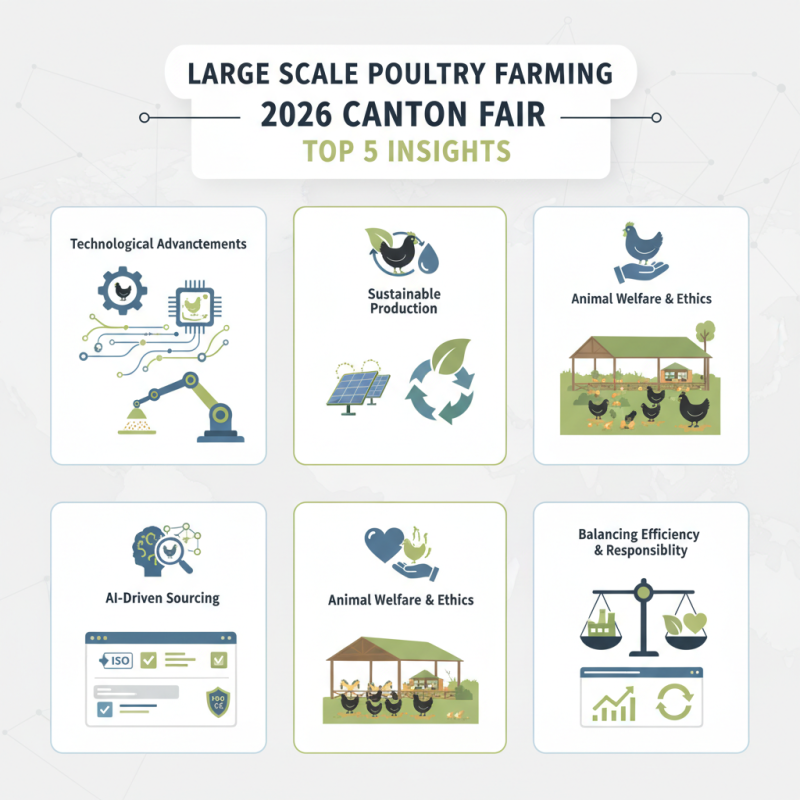
The 2026 Canton Fair showcased dynamic trends in large-scale poultry farming. The event highlighted automation's rise, proving essential for efficiency. Nearly 70% of exhibitors focused on technological innovations. These advancements promote faster production cycles and reduce labor costs significantly.
Sustainability took center stage as well. Reports indicate that 55% of poultry farms now prioritize eco-friendly practices. This shift includes using renewable energy and waste management solutions. Consumers increasingly demand transparency in farming processes. Farmers are adapting, illustrating a growing awareness of environmental impact.
Nevertheless, challenges persist. The industry faces rising feed costs that threaten profitability. Some farms find it hard to maintain quality amid production pressures. Adopting new technologies can be costly, and not all farms can keep up. There’s a noticeable gap between large operations and smaller farms, widening economic disparities. Addressing these issues is critical for future growth and sustainability.
The 2026 Canton Fair highlighted advanced technologies aimed at enhancing poultry production efficiency. One notable trend is the rise of automation in poultry farming. Reports suggest that implementing automated systems can reduce labor costs by up to 30%. Farmers are increasingly adopting these technologies to remain competitive in a growing industry.
New sensor technologies have also emerged. These sensors monitor temperature, humidity, and feed levels in real-time. Research indicates that such systems can boost feed efficiency by 20%. Managing resources better leads to improved health of the poultry. Yet, the implementation can be costly and requires a significant investment upfront.
**Tip:** Consider starting with pilot projects. Testing technologies in smaller setups can minimize risk.
Data analytics is another key area of focus. Farmers can analyze flock performance and health metrics. Insights gleaned from data analytics lead to better decision-making. However, the challenge lies in integrating these systems with existing practices.
**Tip:** Invest in training your team. Understanding data analytics is crucial for maximizing benefits.
Improvements in poultry farming are promising, but change is not without its hurdles. Each innovation brings both opportunities and uncertainties. Embracing them requires careful planning and reflection on current practices.
This chart displays the key insights from the 2026 Canton Fair regarding innovative technologies that enhance poultry production efficiency. The data reflects advancements in automation, feed efficiency, health monitoring, and sustainable practices.
The 2026 Canton Fair showcased significant advancements in sustainability practices among poultry farmers. According to a recent report by the International Poultry Council, around 70% of poultry businesses are now implementing eco-friendly methods. This marked a shift towards reducing carbon footprints and enhancing animal welfare.
Many farmers have adopted renewable energy systems. Solar panels and wind turbines are increasingly common on large-scale farms. By utilizing these technologies, farmers can cut energy costs. However, initial investment remains a barrier for some. The industry’s transition is not yet uniform; regions with fewer resources struggle.
Water management has emerged as another critical focus. Efficient irrigation systems are vital for sustainability. Reports indicate that practices like rainwater harvesting can reduce water consumption by up to 30%. Yet, not all farms can invest in such systems. The disparity in resources raises questions about equity in sustainable transitions.
The poultry industry is witnessing dynamic changes as consumer preferences evolve. At the 2026 Canton Fair, industry experts highlighted several key trends. There is a rising demand for organic and free-range chicken. Consumers are increasingly concerned about animal welfare and food quality. Naturally raised poultry is gaining popularity. This shift presents opportunities for farmers willing to adapt.
Emerging markets offer new possibilities. Countries in Asia and Africa are seeing increased poultry consumption. This growth can attract investment. However, there are challenges. Many farmers struggle with maintaining consistent quality at scale. Some lack access to innovative farming techniques. Addressing these issues is crucial for long-term success in the industry.
Sustainability is another critical focus. Consumers are more eco-conscious. They prefer products with minimal environmental impact. Poultry farms must rethink their practices. Waste management and energy use require improvement. Failing to innovate could lead to losing market share. Therefore, being responsive to consumer demands will determine viability in the competitive landscape.
The 2026 Canton Fair presents a prime opportunity for global poultry stakeholders to enhance networking. The industry has seen a notable surge, with a projected growth rate of 4.5% annually until 2027. Collaboration can help tackle challenges, such as biosecurity, which remains a significant concern. Recent studies indicate that nearly 70% of poultry farms face biosecurity breaches.
Effective partnerships in this sector can lead to significant advancements. For example, sharing best practices improves production efficiency. The average production cost per kilogram of poultry has risen to $1.50, making cost-sharing initiatives essential. Additionally, engaging in joint research projects can accelerate disease management strategies, reducing the impact of avian diseases on production.
Moreover, the importance of technology cannot be overstated. Digital tools are streamlining operations and enhancing traceability. However, the industry still needs to overcome barriers to technology adoption. Approximately 40% of small to medium farms lack access to advanced technologies. These gaps highlight the need for collective action and innovation. The opportunities at the Canton Fair can drive this change forward.