What is Paper Food Packaging and Why is it Important?

In recent years, the significance of paper food packaging has surged. This shift resonates with environmental concerns and consumer preferences. Among the experts in this field, Dr. Emily Carter, a renowned packaging specialist, emphasizes, "Sustainable packaging is not just a trend; it's a necessity for our planet."

Paper food packaging plays a crucial role in reducing plastic waste. It is biodegradable and often recyclable. These qualities cater to the growing demand for eco-friendly options. However, one must reflect on the sourcing of materials and the overall sustainability of production processes. Not all paper packaging is created equal, and some can contribute to deforestation.

Beyond environmental benefits, paper food packaging also impacts food safety and shelf life. The challenge lies in balancing durability with eco-friendliness. Consumers often overlook details, such as how packaging can affect the taste of food. There is still much room for improvement in this industry, calling for innovation and responsible practices. Embracing these changes will shape a more sustainable future for food packaging.
What is Paper Food Packaging and Why is it Important?

What is Paper Food Packaging?

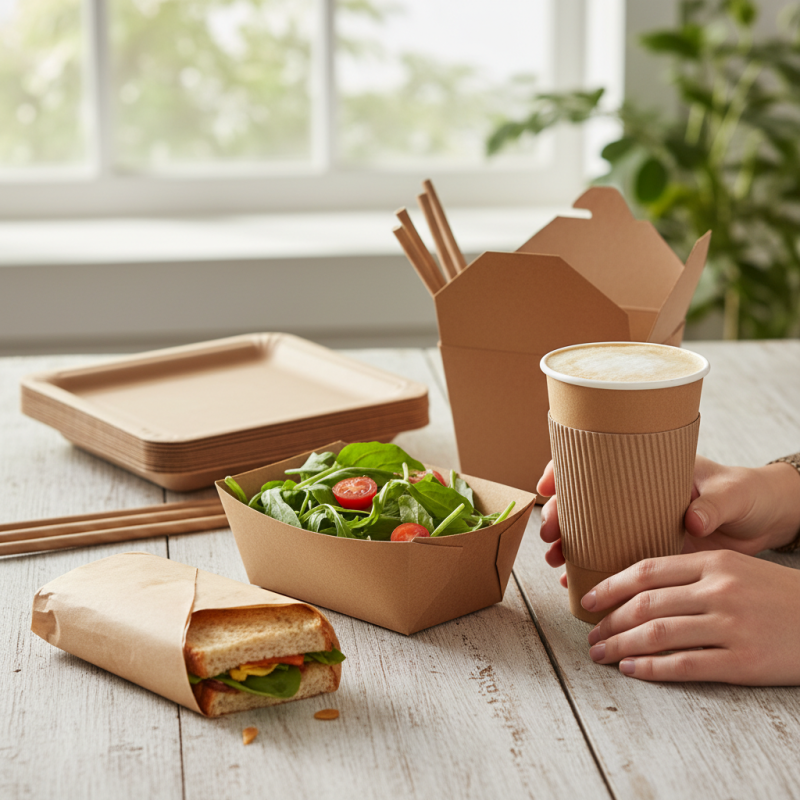
Paper food packaging is an increasingly important aspect of the food industry. It primarily refers to materials made from paper and cardboard used to package food products. This type of packaging is not only sustainable but also highly versatile, catering to a wide range of food items. According to a report by Smithers Pira, the global paper packaging market is projected to reach $332 billion by 2024. This growth reflects a significant shift toward eco-friendly materials.

The advantages of paper packaging include its recyclability and biodegradability. A study from the Paper and Paperboard Packaging Environmental Council states that paper is one of the most recycled materials in the U.S., with a recycling rate of over 66%. However, despite these benefits, challenges remain. The effectiveness of paper packaging against moisture and grease often raises concerns for certain food products. This limitation often forces businesses to find a balance between sustainability and functionality, which is not always straightforward.

Moreover, consumer perception plays a crucial role in the acceptance of paper packaging. Many consumers appreciate its eco-friendly nature, but some still harbor doubts regarding its durability and safety. This gap in perception highlights the need for ongoing education and communication within the industry. As the demand for sustainable solutions grows, the focus on enhancing the capabilities of paper food packaging will remain a critical area of innovation and improvement.

What is Paper Food Packaging and Why is it Important?

Dimension Data
Material Used Recycled paper, Kraft paper
Biodegradability 100% biodegradable
Consumer Preference 70% prefer eco-friendly packaging
Recyclability Renewable and recyclable
Impact on Waste Reduces landfill waste by 30%
Cost Comparison Similar to plastic packaging

The History and Evolution of Paper Food Packaging

Paper food packaging has a rich history that dates back centuries. Early forms of this packaging emerged from natural materials like leaves and bark. These materials served basic purposes, but they were not very durable. With time, people began to innovate. The development of paper-making techniques in China around 100 AD was a game changer. It allowed for the production of a lightweight, versatile material that could encapsulate food.

As societies advanced, paper packaging evolved. In the 19th century, the introduction of food-grade paper transformed the industry. Grocers began using paper bags for items like flour and sugar. These bags were not perfect; they sometimes tore or leaked. Yet, the convenience they offered changed shopping habits. As urbanization increased, demand for better packaging grew. The fight against plastic began to take shape, prompting a resurgence in paper packaging.

Today, we grapple with the environmental impact of packaging materials. Paper food packaging tends to be more sustainable than plastic. However, not all paper products are eco-friendly. Some still rely on harmful chemicals in their production. Better options exist, but they often come at a higher cost. This ongoing tension between cost, convenience, and sustainability continues to challenge the packaging industry.

Benefits of Using Paper Packaging in the Food Industry

What is Paper Food Packaging and Why is it Important?

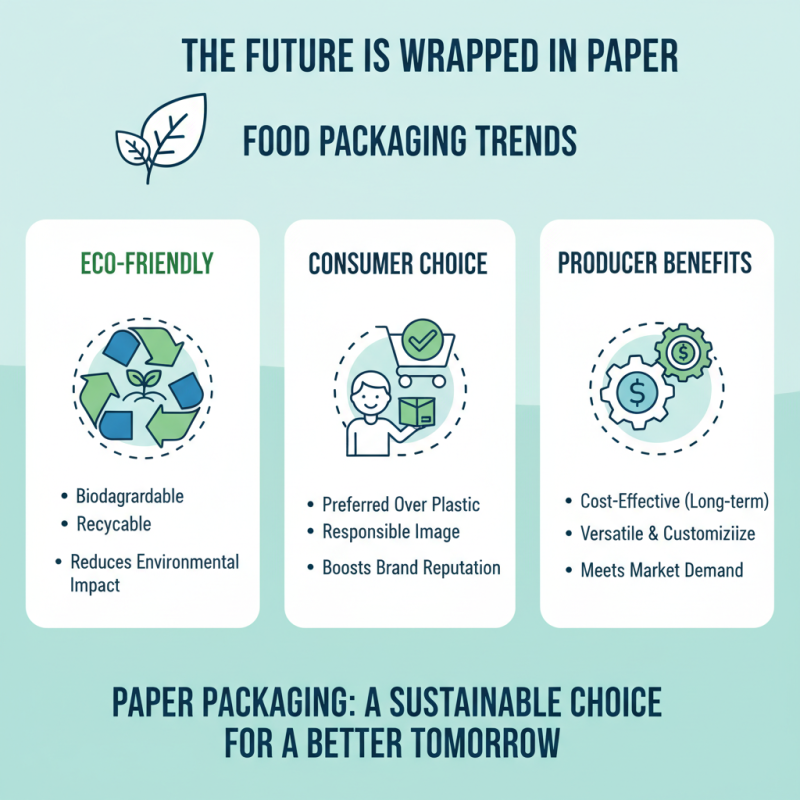
Paper packaging is a rising trend in the food industry. It provides several advantages that appeal to both consumers and producers. One major benefit is its eco-friendliness. Paper is biodegradable and recyclable, making it a better choice than plastic. This can significantly reduce environmental impact. Many consumers prefer products with paper packaging over plastic. They see it as a responsible choice.

Another important aspect is cost-effectiveness. Paper packaging can be cheaper to produce than plastic. In some cases, the production process uses fewer resources. This can lead to lower prices for consumers while maintaining quality. However, companies must consider durability. Sometimes, paper does not protect food as effectively as plastic. There are ongoing debates about its strength and moisture resistance.

Moreover, paper packaging can enhance brand image. Many companies are shifting to sustainable materials. This appeals to eco-conscious consumers. Yet, not all paper options are created equal. Some types are treated with chemicals, raising concerns about safety. It’s essential for brands to evaluate packaging choices carefully. The shift to paper is promising, but challenges remain.

Environmental Impact of Paper Food Packaging

The environmental impact of paper food packaging is a pressing concern today. Paper packaging is often seen as the greener alternative to plastic. It is biodegradable and recyclable, which means it can break down naturally over time. However, this doesn't mean it is without issues. The production of paper requires significant resources, including water and trees, which can lead to deforestation if not managed properly.

Moreover, not all paper packaging is created equal. Some types are coated with synthetic materials that can hinder their recyclability. This creates a dilemma for consumers. They often want to make eco-friendly choices, but may not have enough information. It's important to be aware of how specific packaging materials impact the environment. Choosing packaging that prioritizes sustainability is crucial, yet the complexities involved can confuse and mislead buyers.

People must also consider the entire lifecycle of paper packaging. From production to disposal, various factors play a role in its overall environmental footprint. For instance, transportation of paper products can contribute to greenhouse gas emissions. This awareness prompts a reflection on our habits. Are we truly making the best choices for the environment, or are we merely acting on assumptions? Understanding the nuances of paper packaging is a step toward more thoughtful consumer behavior.

Future Trends in Paper Food Packaging Solutions

The future of paper food packaging is evolving rapidly. With rising environmental concerns, brands are looking for sustainable options. Paper packaging is biodegradable and recyclable, making it a preferred choice for many companies. In the coming years, we can expect innovative designs and materials that enhance functionality while reducing waste.

One exciting trend is the use of plant-based coatings. These coatings provide moisture and grease resistance without compromising recyclability. Consumers demand packaging that is both eco-friendly and functional. Brands must find the balance between these needs.

Tip: Always choose packaging made from recycled materials to lessen environmental impact.

Another area of development is the integration of smart technology. Packaging with QR codes or sensors can provide customers with fresh date tracking or nutritional information. This approach can enhance product safety and improve transparency. However, implementing such tech can be challenging and may lead to potential technical glitches.

Tip: Educate consumers on the benefits of smart packaging to increase acceptance.

As brands pivot to paper solutions, they need to be mindful of costs and consumer expectations. Not every solution is perfect. Some paper materials may not withstand moisture effectively. Companies must continually test and innovate for improvement.