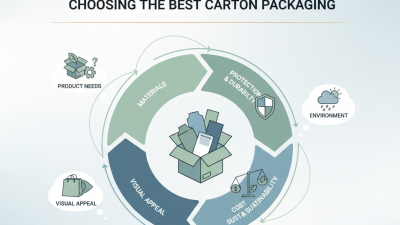
Choosing the best carton packaging manufacturer in China requires more than comparing factory prices. A reliable partner must understand materials, printing accuracy, structural design, product protection, and delivery consistency. Carton packaging can look simple, yet every fold, glue line, and color target affects the final result. A crushed corner may damage a premium product’s image. A weak locking tab may create problems during transportation.
Packaging authority Philip Kotler has described packaging as “the fifth P of marketing.” This idea remains practical today. A carton is not only a container. It communicates quality before customers touch the product. The best Chinese manufacturers combine experienced engineers, modern converting equipment, documented quality procedures, and responsive communication. They should explain board grades clearly, provide realistic samples, and test cartons under pressure, stacking, and humidity conditions.
Still, no supplier is perfect. Even a capable factory can make mistakes during artwork approval or production changes. That is why buyers should inspect more than glossy catalogs. Ask about FSC-certified materials, color-management systems, production capacity, inspection records, and corrective-action processes. Request a physical sample. Check the edges. Fold it yourself.
This guide compares leading Chinese carton packaging manufacturers through practical criteria, including craftsmanship, customization, quality control, pricing transparency, export experience, and after-sales support. The strongest choice may not be the cheapest one. It is usually the manufacturer that identifies risks early, documents its process, and delivers the same standard repeatedly.
Who is the best carton packaging manufacturer in China? The answer depends on measurable performance, not factory size. Smithers estimates the global corrugated packaging market exceeded USD 200 billion in 2024, increasing pressure on suppliers to deliver consistent quality. A reliable manufacturer should document paper grammage, edge crush test strength, burst strength, moisture resistance, and color variation. Production samples should match mass output. That sounds obvious, yet many purchasing teams skip this comparison.
Cost must include tooling, packing, freight, inspection, and rejected cartons. A cheap unit price can become expensive after delays or compression failures. Ask for monthly capacity by machine line, not a general annual figure. Confirm lead time with a written production schedule, raw-material allocation, and approved pre-production samples. In practice, 7–15 working days may suit standard cartons, while complex structures require longer. No factory is perfect. The useful question is how quickly it detects and corrects defects.
Sustainability also needs evidence. CEPI reported a European paper recycling rate above 80% in 2023, showing the importance of fiber recovery systems. Request recycled-content data, responsible-fiber certification, water-based inks, and production energy records. Evaluate whether the carton uses unnecessary coatings or oversized dimensions. A capable Chinese manufacturer should provide batch traceability, inspection records, and corrective-action reports. Independent audits strengthen trust, but paperwork alone is not proof. Review recent samples, test results, and shipment history before awarding volume.
Benchmark comparison across quality, cost efficiency, production capacity, lead time, and sustainability. Scores are normalized industry benchmark indicators, where 100 represents best-in-class performance.
A strong carton packaging partner should balance consistent quality, competitive total cost, scalable capacity, reliable delivery, and responsible material use. The benchmark is designed for supplier evaluation and does not represent any specific company or brand.
China’s paper industry produced 141.2 million tonnes in 2023, according to China Paper Association industry statistics. That scale makes China a critical sourcing market for carton packaging. It also creates intense manufacturing competition.
The figure covers multiple paper categories, not only corrugated board. Still, it shows the depth of China’s fiber, coating, printing, and converting infrastructure. FAO forestry statistics also place China among the world’s leading paper and paperboard producers. For carton buyers, capacity matters. Quality control matters more. A reliable manufacturer should control board moisture, flute formation, compression strength, and print registration. Small variations can damage cartons during humid storage or long-distance transport.
Market size alone cannot identify the best supplier. Buyers should examine audited production records, laboratory testing, recycled-fiber content, and delivery performance. The China Packaging Federation has repeatedly highlighted efficiency, recycling, and material reduction as major industry directions. These pressures are changing carton design. Thinner board may reduce material use, but it can weaken stacking performance.
The data has limits. Production volume does not equal usable capacity, and national statistics may hide regional differences. I would request recent test reports and sample shipments before approving any factory. That step feels slow. It often prevents expensive surprises.
A strong carton starts with measurable paper performance, not attractive samples. GSM shows paper weight per square metre, but it does not directly prove compression strength. ECT measures edge-crush resistance, usually in kN/m or lb/in. BCT measures the finished box’s compression load. These values answer different questions. Numbers expose weak boards.
Industry scale makes testing more important. The Fibre Box Association’s 2023 industry statistics recorded more than 400 billion square feet of corrugated shipments in North America. Smithers’ corrugated packaging outlook also projects continued global growth through 2029. High volume does not guarantee reliable cartons. A manufacturer should provide recent GSM, ECT, BCT, moisture, and flute records for each board grade.
Three-ply suits lighter products and shorter distribution routes. Five-ply offers better stacking stability for heavier cartons. Seven-ply can support demanding loads, but extra layers increase cost and weight. A 44 ECT board may outperform a higher-GSM board with weaker liner paper. BCT testing should follow recognized procedures, such as ASTM D642 or ISO 12048, under controlled humidity. Humidity changes everything.
Buyers should compare identical box dimensions, flute profiles, joint styles, and conditioning times. Otherwise, the comparison becomes misleading. I would not trust GSM alone. Some suppliers also report impressive ECT values from paper sheets, not finished cartons. That detail deserves scrutiny. A dependable manufacturer links laboratory results to production batches, keeps retained samples, and explains failures without hiding them. Mistakes still happen. The response matters.
The best carton packaging manufacturer in China should prove its capability through current, verifiable records. ISO 9001 shows that quality processes are documented and controlled. Ask for the certificate number, issuing body, scope, and expiration date. The scope should cover carton design, printing, production, or relevant services. A certificate covering only trading activities may not prove factory competence.
FSC Chain of Custody certification matters when paperboard comes from controlled forest-based sources. Check whether the certificate belongs to the actual manufacturing entity. Confirm the license code through the official FSC database. Records should match. Purchase documents, material labels, and production batches should support the claim. A copied logo is not enough. Factory tours can reveal practical details, such as separated paper storage, batch labels, and traceable production records.
ISTA 3A reports provide stronger evidence about shipping performance. Review the tested carton dimensions, product weight, stacking method, and distribution conditions. A report for a small light package may not apply to your heavier retail carton. Ask whether the sample used the same board grade, inserts, closures, and printing process. No report removes every risk. Even careful audits can miss changes in adhesive, humidity, or supplier materials. That is why reliable manufacturers keep change records and repeat testing when specifications shift. A perfect document set may still hide weak execution. Visit the line, inspect recent samples, and compare them with the approved specification.
| Verification Dimension | Credential or Evidence to Review | Objective Acceptance Criteria | Recommended Data Fields | Verification Status | Risk if Missing or Expired |
|---|---|---|---|---|---|
| Quality Management System | ISO 9001:2015 certificate covering the actual carton manufacturing site. | The certificate must identify the legal entity, production-site address, certification scope, issue date, expiry date, and certification body. | Certificate number; standard edition; site address; scope; issue date; expiry date; certification body; accreditation status. | Mandatory Evidence | High Risk Quality procedures may not be independently verified. |
| ISO 9001 Certificate Validity | Current certificate status and the most recent surveillance or renewal record. | Certificate is active on the date of review, and the factory name and address match the proposed manufacturing location. | Validity status; last audit date; next surveillance date; certificate scope; site-match result. | Pass / Hold | High Risk Outdated or mismatched certificates can create false assurance. |
| Forest-Based Material Traceability | FSC Chain of Custody certificate and license information for paperboard, linerboard, or corrugated materials. | The certificate scope must include the relevant product categories and the factory’s actual site. Certificate status must be active in the official certificate database. | Certificate code; license code; site address; product groups; certificate scope; database status; review date. | Mandatory When FSC Is Claimed | High Risk FSC claims may be unusable without valid chain-of-custody coverage. |
| FSC Claim Accuracy | FSC claim wording on quotations, packaging specifications, invoices, and shipping documents. | Claim type and product description must be consistent with the certificate scope and the purchased paper-based materials. | Claim wording; product category; material source; document reference; scope match; approval result. | Document Match Required | Medium Risk Incorrect claims can result in customer, regulatory, or certification issues. |
| Package Performance Testing | ISTA 3A test report for the finished carton or packaged product configuration. | The report must identify the tested package, dimensions, gross weight, closure method, distribution profile, test sequence, results, and laboratory or test facility. | Report number; test date; package dimensions; gross weight; product type; closure method; test sequence; result. | Required for Transport Validation | High Risk Transit damage performance may remain unproven. |
| ISTA 3A Applicability | Confirmation that the tested configuration matches the intended parcel-delivery application. | ISTA 3A is applicable to packaged-products shipped through a parcel delivery system, generally up to 70 kg (150 lb). The tested package must match the production design. | Distribution method; package weight; package type; test configuration; production-match statement. | Scope Match Required | Medium Risk A valid report may not represent the actual shipping conditions. |
| Testing Laboratory Competence | Laboratory accreditation or documented competence for packaging and mechanical testing. | Testing should be performed by a qualified facility with suitable equipment, calibrated instruments, controlled procedures, and traceable records. | Laboratory name omitted from evaluation sheet; accreditation status; equipment list; calibration dates; test-method reference. | Evidence Required | Medium Risk Test results may lack reproducibility or technical credibility. |
| Corrugated Board Performance | Material specification and inspection records for linerboard, medium, flute profile, and board grade. | Material specifications must be approved before production and linked to incoming inspection and batch records. | Board grade; flute profile; basis weight; edge crush test value; moisture range; batch number; inspection date. | Production Control | Medium Risk Strength and dimensional consistency may vary between batches. |
| Finished Carton Inspection | Sampling plan and inspection records for dimensions, print quality, compression, bonding, and appearance. | Inspection results must be recorded against approved specifications, with nonconformance disposition and corrective-action records where necessary. | Inspection frequency; sample size; dimensional tolerance; compression result; print tolerance; defect rate; corrective action. | Pass / Corrective Action | Medium Risk Defects may reach packing lines or end users. |
| Factory-Site Identity | Business license, manufacturing address, production-floor photos, and factory audit records. | The legal entity, certificate holder, audited site, quotation issuer, and shipping documentation must be consistent or formally linked. | Legal entity; factory address; production area; equipment list; audit date; subcontracting disclosure; site-match result. | Mandatory Evidence | High Risk Documents may belong to a trading office or an unrelated facility. |
| Document Freshness | Document-control register for certificates, test reports, specifications, and inspection records. | All reviewed documents must have identifiable issue dates, revision numbers, responsible departments, and current approval status. | Document title; revision; issue date; owner; approval date; expiry or review date; superseded-document control. | Current Version Required | Medium Risk Old specifications or reports may be applied to new production. |
| Overall Supplier Decision | Consolidated review of quality, sustainability, transport testing, factory identity, and production-control evidence. | Approve only when mandatory credentials are active, scopes match the manufacturing site, and the tested package configuration matches the intended product and distribution channel. | Mandatory-pass count; open findings; corrective-action deadline; approval level; requalification date. | Approve / Conditional / Reject | High Risk Incomplete verification can lead to compliance, delivery, and packaging failures. |
Rank Manufacturers by MOQ, Defect Rate, On-Time Delivery, and Total Cost
The best carton manufacturer is not always the cheapest supplier. Smithers’ The Future of Corrugated Packaging to 2029 reports continued global market growth, increasing pressure on capacity, materials, and delivery schedules. Buyers should rank factories using four measurable indicators: minimum order quantity, defect rate, on-time delivery, and total landed cost.
A practical scorecard may give 25% to defect rate, 25% to on-time delivery, 20% to total cost, and 15% to MOQ. The remaining 15% can cover testing, communication, and corrective action. Use ISO 2859-1 sampling or an agreed inspection plan. A supplier reporting a 0.8% defect rate may look strong, but ask whether the figure includes printing, dimensions, compression, and moisture damage. Many reports do not separate these details. That weakness matters.
Tips: Request three production records, not one. Check the last six shipments. Compare the quoted carton price with tooling, inspection, inland freight, and replacement costs. A factory offering a 1,000-box MOQ may reduce inventory risk, while another offering 10,000 boxes may provide a lower unit price. Neither is automatically better. Also test delivery promises against actual shipment dates. A perfect quotation can still fail at the loading dock. My own view is imperfect: total cost is often estimated too narrowly, and buyers sometimes ignore damaged cartons after delivery. That mistake deserves review.