Who Are the Best Folding Carton Manufacturers in China?

Folding cartons may look simple on a shelf. Behind a crisp crease or a clean tuck flap are decisions about board grade, print registration, coating, tooling, and delivery reliability. For brands sourcing in China, the challenge is not merely finding a low quotation. It is identifying a manufacturer that can protect products, reproduce artwork consistently, and scale production without losing control of details.

The China Packaging Federation’s 2023 industry statistics put the country’s packaging-sector operating revenue at about RMB 1.15 trillion. This figure covers packaging broadly, not folding cartons alone, but it shows the scale of China’s supplier base. Smithers’ report, The Future of Folding Cartons to 2028, also examines demand, materials, and technology shaping the global category. Numbers help. They do not prove that any individual factory can meet a buyer’s specifications.

As designer Jony Ive put it, “Packaging can be theater, it can create a story.” For folding cartons, that story must survive real production: accurate colors, sharp folds, secure closures, and cartons that arrive without crushed corners. A factory sample is useful. A repeatable process matters more. This guide compares Chinese manufacturers through practical criteria, including equipment, quality controls, customization, communication, and export experience. Some details remain difficult to verify from a website alone. That deserves a second look.
Who Are the Best Folding Carton Manufacturers in China?

What Defines a Folding Carton? Paperboard Types and ISO 536 Basis Weight

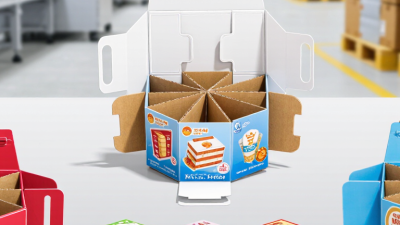
A folding carton is a paperboard package cut, creased, and folded into shape, usually with glued seams. It often arrives flat, saving storage space before filling. Think of a cereal box: its panels protect the product, carry print, and fold along precise score lines. The board must bend cleanly without cracking. Small changes in grain direction or moisture can affect that result.

Common grades include solid bleached sulfate, folding boxboard, and recycled paperboard.

Solid bleached sulfate has a clean, pale surface suited to detailed printing.

Folding boxboard combines layers, often with a smooth outer face and a bulkier middle.

Recycled grades can offer a practical choice for many applications, though color and surface consistency may vary.

No grade is perfect for every carton.

ISO 536 measures paper and paperboard grammage: mass per unit area, reported in grams per square metre. It does not measure thickness, stiffness, or folding performance.

A higher gsm value may indicate more material, but it does not automatically mean a stronger carton. Check caliper, grain direction, crease quality, and print requirements too.

A sample may look convincing on a desk, yet split at a tight fold on the production line. Testing actual carton blanks is worthwhile.

It takes time.

Which Chinese Manufacturers Lead? Compare Production Capacity and Export Reach

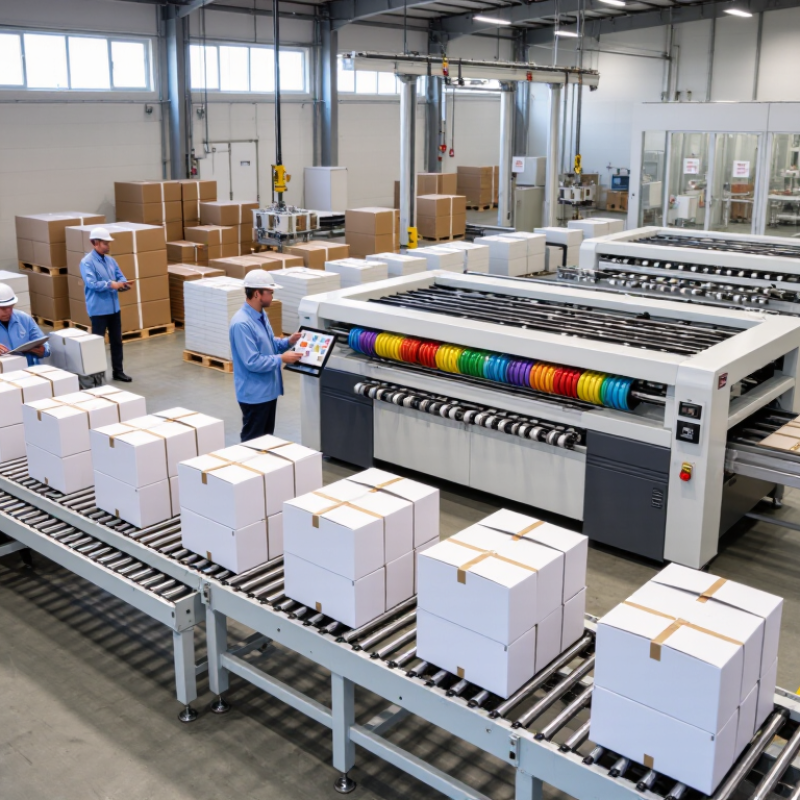
Production capacity is more than the number of carton presses on a factory floor. Compare press formats, die-cutting speed, shift patterns, and monthly output for your carton size. Ask for recent production records and a sample schedule. A busy line is not the same as dependable capacity.

China Packaging Federation statistics put the country’s total packaging-industry operating revenue at RMB 1,156.39 billion in 2023. This is a broad sector figure, not folding-carton revenue, so it cannot rank individual factories. For export reach, use UN Comtrade’s HS 4819 trade series as a country-level benchmark, then request each supplier’s destination-market history and recent shipment documents. Check whether quoted lead times include board sourcing, proofing, and sea freight. Small details matter. A manufacturer may report high annual capacity, yet seasonal demand or imported board can slow a specific order. That distinction is easy to miss.

How Do Common 200–400 g/m² Board Grades Suit Different Cartons?

A folding carton’s board grade affects stiffness, folding, print quality, and cost. Around 200–250 g/m², lighter stock suits small cartons for low-weight items, such as paper goods or compact accessories. It folds easily, but broad panels may feel soft or dent during handling.

At 250–300 g/m², many everyday cartons gain a firmer feel without becoming difficult to crease. This range can work well for personal-care products and boxed dry goods.

Grades around 300–350 g/m² offer more support for larger panels or heavier contents. The trade-off is tighter folding tolerance: poorly set crease lines can crack, especially on printed or coated surfaces.

At 350–400 g/m², cartons feel substantial and can protect contents from routine bumps, though they may need stronger converting equipment and careful design.

Not by weight alone. Board thickness, fiber composition, grain direction, and humidity also change performance. A practical specification should include the carton’s dimensions, contents, and packing conditions—not just its gsm. Ask for a folded sample and inspect its corners after handling. A clean sample can still mislead; production speed and damp storage may reveal weak creases.

How Can Buyers Verify Print and Material Quality Under ISO 12647-2?

ISO 12647-2 sets process-control requirements for offset lithography; it is not a blanket certificate for a carton factory. Ask suppliers for recent press-sheet measurements, the instrument used, and records showing calibration. Check process colors against the agreed reference, then inspect registration, fine text, gradients, and solids under consistent lighting. A proof is not production. Compare a press sample with the approved proof on the actual carton stock, because coating and board shade can shift color.

Material quality needs its own checks. Request the board grade, grammage, thickness, and batch traceability, then inspect samples for surface marks, warp, and edge damage. Test folding and creasing on finished blanks; a clean-looking sheet can still crack at a fold. Smithers’ 2023 report, The Future of Global Printing to 2028, valued global print at about US$818.6 billion in 2023 and forecast US$846.2 billion by 2028. That broad market estimate is not a carton-quality measure, but it underscores the need for repeatable production as print demand grows.

Tips: Ask for results from three separate production runs, not only a hand-picked sample. Record substrate lot, press conditions, and measured color differences each time. If a supplier cannot explain a failed reading, pause before approving the order. Small gaps in documentation matter.

Which Supplier Fits Your Order? Compare MOQ, Lead Time, and Certifications

Choosing a Chinese folding carton manufacturer is less about a “best” list and more about matching order size, timing, and quality controls. FAO’s Global Forest Products Facts and Figures 2022 reports that global paper and paperboard production reached 401 million tonnes that year. That scale does not guarantee a suitable supplier, though. Ask for a written MOQ by carton style, board grade, and print finish; a simple white carton may have a very different threshold from a foil-stamped design.

Lead time should include proof approval, tooling, production, and shipping—not just factory run time. Request a dated schedule and ask what happens if artwork changes. Check samples for clean folds, sharp print registration, and glue that holds at the corners. Ask to verify current ISO 9001 or FSC Chain of Custody certificates, including the covered site and scope. A certificate alone does not prove every order follows the same process.

Tips: Ask for proof. Compare landed cost, not unit price alone. A low MOQ can still cost more when setup fees are spread across fewer cartons. One detail is easy to miss: confirm whether the quoted lead time begins after deposit, artwork approval, or both. Get that point in writing.