Choosing the best food packaging manufacturer in China requires more than comparing prices or inspecting glossy catalogs. Packaging affects food safety, shelf life, logistics, branding, and consumer trust. A reliable evaluation must examine factory experience, material control, testing systems, production capacity, and communication quality.
The opportunity is substantial. Smithers’ The Future of Global Packaging to 2028 forecasts the global packaging market will exceed 1.2 trillion US dollars by 2028. Its analysis also identifies sustainability, lightweighting, and advanced barrier materials as major development forces. Meanwhile, FAO research continues to show that better packaging can help reduce food loss during storage and distribution. These findings matter in China, where manufacturers serve both domestic brands and demanding international supply chains.
Packaging consultant Adam Peek describes packaging as “a brand’s first physical touchpoint.” That idea is practical. A crisp pouch, secure seal, or readable date code can shape confidence before the first bite. However, the lowest quotation may hide weaker films, slower inspections, or inconsistent batch performance. It happens.
The best manufacturer is therefore not automatically the largest factory. It is the partner that can prove capability with audit records, sample testing, traceable materials, and realistic delivery data. Buyers should request migration-test documentation, production photographs, quality procedures, and references from comparable food categories. Certifications also deserve verification, not blind acceptance.
This guide examines leading Chinese manufacturers through that evidence-based lens. It considers flexible packaging, rigid containers, paper solutions, custom printing, sustainability claims, and export experience. No supplier is perfect. A careful shortlist can still prevent expensive mistakes.
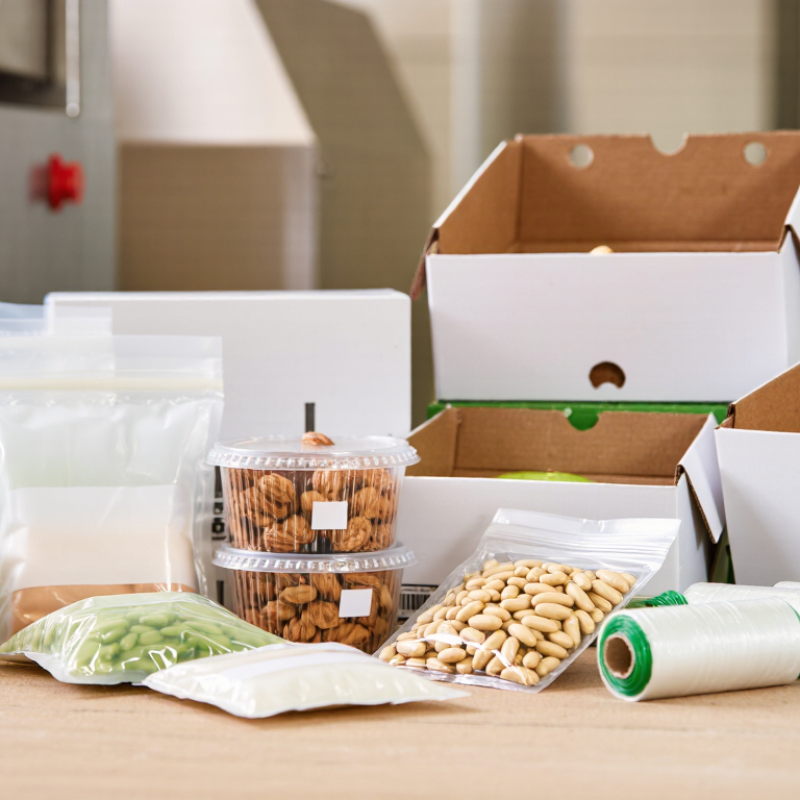
The best food packaging manufacturer in China is defined by more than modern machines or attractive pricing. Reliable performance begins with practical experience. A capable factory understands how moisture, oil, heat, freezing, and transportation affect packaging. Its engineers should test seal strength, puncture resistance, odor transfer, and print durability before mass production.
Professional knowledge also appears in daily details. Raw materials need clear batch records and controlled storage. Production lines should follow documented procedures, hygiene requirements, and in-process inspections. A dependable manufacturer can provide food-contact testing, material declarations, and traceability records suited to the destination market. It should also explain limitations honestly instead of promising every possible result. That transparency matters.
Quality control must be measurable. Sample approval, color checks, thickness testing, and carton drop tests create useful evidence. Factory audits should review cleanliness, worker training, calibration records, and complaint handling. In my experience, small details often reveal more than a polished showroom. A loose seal or unclear lot code can become an expensive problem after shipment. No manufacturer is perfect. Earlier designs may overlook stacking pressure or temperature changes during delivery. The stronger supplier investigates these gaps, records corrective actions, and improves the process without hiding mistakes. Communication should remain clear when specifications change, timelines tighten, or testing produces an unexpected result. That combination of experience, technical discipline, openness, and consistent evidence defines a trustworthy food packaging manufacturer in China.
What Is the Best Food Packaging Manufacturer in China?
Key Criteria for Evaluating Food Packaging Manufacturers
The best manufacturer is not the one with the lowest quotation. It is the one that controls risk consistently. In factory audits, check raw-material approval, batch traceability, hygiene zoning, and documented corrective actions. A clean showroom proves little. Ask to inspect production floors, laboratories, and storage areas.
Food safety deserves measurable evidence. The World Health Organization estimates that contaminated food causes about 600 million illnesses annually. Therefore, suppliers should provide migration testing, seal-strength results, and ink or adhesive compliance records. For plastic packaging, verify food-contact declarations for every material layer. ISO 9001 certification helps, but it cannot replace process verification. That distinction is often missed.
Sustainability also needs numbers, not attractive claims. The United Nations Environment Programme reported in 2023 that packaging uses roughly 40% of global plastic production. Request recycled-content evidence, material-weight data, and recyclability assessments. Ask whether production scrap is measured and reused. The ISO Survey 2023 recorded more than 1.2 million ISO 9001 certificates worldwide, yet certification alone does not prove dependable delivery. Review three months of on-time shipment data, complaint rates, and sample approval records. Leave room for doubt. No factory is perfect; transparent suppliers show how they detect and repair weaknesses.
Key criteria for evaluating food packaging manufacturers
A reliable food packaging manufacturer should be evaluated by more than price. Food-contact compliance, barrier performance, quality consistency, supply reliability, sustainability, customization capability, and total cost are essential factors when comparing suppliers.
What Is the Best Food Packaging Manufacturer in China?
Choosing a food packaging manufacturer in China starts with materials, not glossy catalogs. Experienced buyers examine product shape, filling temperature, shelf life, and transport conditions. Common products include stand-up pouches, retort bags, trays, cups, jars, cartons, and paper-based wraps. Each format solves a different handling problem. A thin pouch may save space. A rigid tray can protect delicate portions.
Flexible packaging often uses polyethylene, polypropylene, polyester, or multilayer films. These layers can provide sealing, strength, moisture control, and light protection. Paper and paperboard suit dry goods, takeaway boxes, and outer cartons. They need suitable coatings when grease or condensation is expected. Glass offers strong barrier performance and a premium feel, but it adds weight and breakage risk. Aluminum foil blocks light and oxygen well, although it requires careful lamination.
Reliable manufacturers should explain material structures, migration testing, seal strength, traceability, and production controls clearly. Ask for samples made with the intended filling process. A package that looks good on a desk may fail beside a hot filling line. In practical sourcing work, teams sometimes choose materials mainly for cost, then redesign after weak seals appear during transport. That mistake is avoidable, but not always. Clear specifications, batch records, and realistic testing reveal whether a supplier can deliver consistent food packaging at scale.
What Is the Best Food Packaging Manufacturer in China?
The best food packaging manufacturer is not defined by price alone. In supplier assessments, I look for stable quality, clean production areas, and clear material traceability. Each roll, pouch, or container should have a documented batch number. This detail supports faster investigations when defects appear. Reliable manufacturers also perform thickness checks, seal-strength tests, and visual inspections during production. Food-contact materials need suitable migration testing for their intended use. Results should come from qualified laboratories, not informal internal claims.
Safety depends on disciplined systems. Look for HACCP-based controls, documented cleaning procedures, pest management, and trained operators. Certifications such as ISO 9001 or BRCGS can provide useful evidence, but certificates alone are not proof. Their scope, expiry date, and issuing body require careful checking. Production standards should also include controlled storage, calibrated equipment, and written procedures for nonconforming products. No factory is flawless. A supplier that openly records mistakes may be more trustworthy than one promising perfection.
Tips: Request recent audit records, test reports, and sample production data. Visit the facility if possible. Check whether the sample matches the mass-produced order. Ask how complaints are investigated and corrected. I would also compare approved materials with actual incoming records. This step is often missed. Packaging can look excellent while hidden layers, adhesives, or inks need further verification. Clear communication, repeatable testing, and honest documentation usually reveal the strongest long-term partner.
Choosing the right Chinese food packaging manufacturer requires more than comparing prices. Begin with the packaging material, filling temperature, shelf life, and transport conditions. A supplier experienced with dry snacks may not understand oxygen-sensitive products. Ask for samples made with the same material and production method as your intended order. Small details matter, including seal strength, odor, print accuracy, and carton protection.
Review current food-contact test reports and confirm that they match the exact packaging structure. Do not accept a generic certificate without checking its laboratory, date, and product description. Request factory registration details, quality procedures, traceability records, and inspection results from recent batches. A reliable manufacturer should explain how it controls raw materials, production humidity, metal contamination, and final packing. Clear answers are important.
Visit the facility when possible, or arrange a detailed video audit. Look at storage areas, cleaning routines, sampling points, and rejected goods. A polished factory tour can still hide weak documentation. Pay attention to communication after the quotation. Delayed replies may become costly during artwork approval or shipment preparation. Discuss minimum order quantities, tooling charges, lead times, payment terms, and remedies for defective goods in writing. Before scaling up, use a pilot order and test it under real distribution conditions. It may feel slower, but rushed selection often creates avoidable waste.
| Selection Dimension | What to Verify | Practical Benchmark | Documents or Evidence to Request | Priority |
|---|---|---|---|---|
| Food-Contact Compliance | Whether the finished packaging and all relevant inks, coatings, adhesives, and additives are suitable for the intended food-contact use. | Compliance should match the destination market, food type, temperature, storage time, and direct or indirect contact conditions. | Declaration of compliance, migration-test reports, material specifications, and applicable records such as EU Regulation (EC) No. 1935/2004, FDA 21 CFR, or China GB 4806 requirements. | Critical |
| Material Selection | Material structure, barrier properties, sealability, stiffness, grease resistance, moisture resistance, and compatibility with the product. | The proposed structure should be supported by measurable oxygen-transmission, water-vapor-transmission, seal-strength, or compression data where relevant. | Technical data sheet, material-layer description, certificates of analysis, and test methods used. | High |
| Quality Management | Production controls, incoming-material inspection, in-process checks, final inspection, traceability, and corrective-action procedures. | A documented quality system with batch traceability and defined acceptance criteria should be in place before mass production. | ISO 9001 certificate if applicable, quality manual, inspection plan, sample inspection records, and recent audit results. | High |
| Packaging-Safety Certification | Whether the factory follows a recognized packaging or food-safety management standard suitable for the product category. | Certification should be valid, issued for the correct facility, and cover the relevant packaging materials and manufacturing activities. | Valid certificate and scope for standards such as BRCGS Packaging Materials, FSSC 22000, or another appropriate certification scheme. | High |
| Minimum Order Quantity | Minimum order requirements by size, material, printing method, and production process. | The minimum order should fit forecasted demand and storage capacity; setup, plate, cylinder, and tooling charges should be separated from unit pricing. | Written quotation showing minimum quantities, setup fees, tooling fees, tiered pricing, and payment terms. | Medium |
| Lead Time and Capacity | Sampling time, tooling time, production lead time, monthly capacity, and the ability to handle seasonal demand. | The supplier should provide separate timelines for artwork approval, sampling, tooling, production, inspection, and dispatch rather than one general estimate. | Production schedule, capacity statement, sample timeline, on-time-delivery records, and written contingency arrangements. | High |
| Printing and Appearance Control | Color consistency, print registration, barcode readability, surface finish, artwork control, and acceptable visual tolerances. | Color approval should be based on an agreed proof or press sample, with written tolerances for defects and registration variation. | Approved artwork proof, color standard, defect classification, inspection photos, and barcode verification records. | Medium |
| Testing and Validation | Testing capability for dimensions, seal integrity, leakage, drop resistance, compression, migration, and transport performance as applicable. | Tests should reflect the final packaging format and actual distribution conditions, not only the raw material. | Test reports with sample identification, date, test method, acceptance criteria, and results from an internal or independent laboratory. | Critical |
| Sustainability and Recyclability | Material composition, recycled content, recyclability in the target market, responsible sourcing, and production-waste management. | Environmental claims should be tied to measurable content or recognized certification and should not imply recyclability where local collection systems do not support it. | Material declaration, recycled-content evidence, FSC chain-of-custody certificate where applicable, waste records, and recyclability assessment. | Medium |
| Export and Logistics Capability | Export documentation, packaging for transport, carton and pallet specifications, Incoterms, and experience with the destination market. | The supplier should clearly define shipping terms, carton dimensions, palletization, protection against moisture, and responsibility for export documents. | Packing list, commercial invoice sample, carton specification, pallet plan, Incoterms quotation, and shipping references with confidential details removed. | High |
| Communication and After-Sales Support | Responsiveness, technical communication, complaint handling, replacement policy, and change-control procedures. | A reliable supplier should provide a named project contact, written approval steps, response timelines, and a formal process for nonconforming goods. | Communication protocol, sample approval workflow, complaint-response procedure, corrective-action template, and warranty or replacement terms. | Medium |