China Best Food Packaging Boxes Wholesale Supplier?

Choosing a China best food packaging boxes wholesale supplier requires more than comparing unit prices. Packaging must protect food, support safe handling, and represent your brand at the point of sale. A reliable supplier should understand material selection, printing quality, production control, and export documentation.

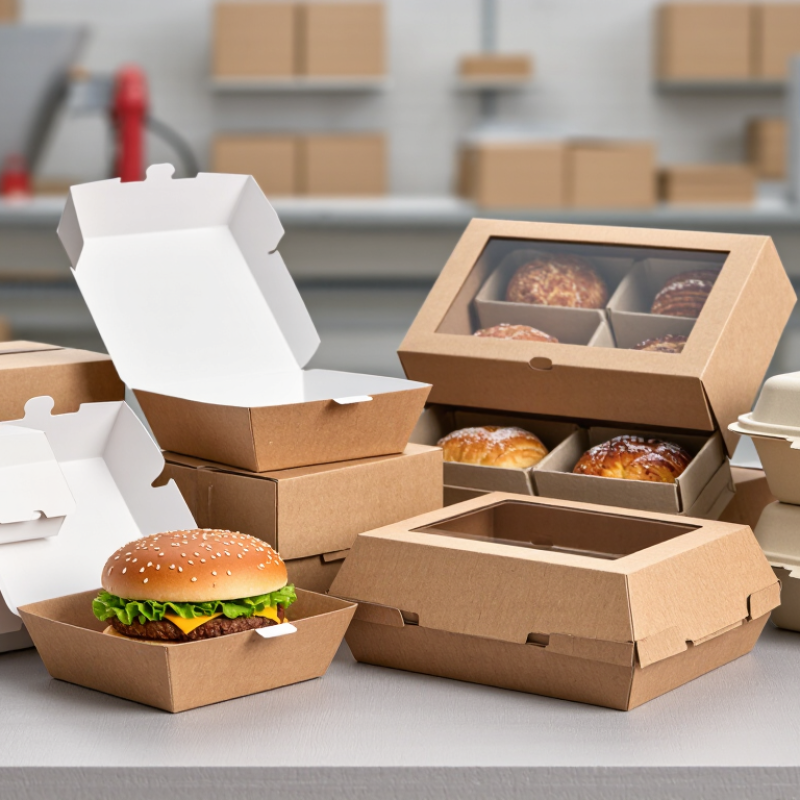
The right food packaging boxes may include kraft paper meal boxes, folding cartons, bakery boxes, takeaway containers, or custom-printed retail packaging. Each option serves a different purpose. A grease-resistant coating can help protect a burger box. A rigid structure may better support delicate pastries. Recyclable paper can strengthen a sustainability message, but its performance should be tested under real moisture and temperature conditions.

Small details matter.

Experienced buyers usually request samples before approving bulk production. They check folding accuracy, color consistency, odor, surface finish, and box strength. They may also test stacked cartons during transport. These steps reveal practical issues that product images cannot show. An established Chinese manufacturer should provide clear specifications, stable communication, transparent lead times, and suitable quality inspections.

However, no supplier is perfect. A low quoted price may exclude tooling, freight, testing, or protective packaging. I have seen attractive samples fail when mass-produced, especially around weak creases and uneven printing. That risk deserves honest attention. Buyers should compare materials, certifications, factory experience, minimum order quantities, and after-sales support together. A dependable partnership develops through documented requirements, realistic expectations, and repeated quality checks. This approach makes wholesale sourcing more predictable and helps businesses select food packaging boxes that perform well from production to the customer’s hands.
China Best Food Packaging Boxes Wholesale Supplier?

Types of Food Packaging Boxes Available from China Suppliers

China’s food packaging box suppliers offer several formats for different products, serving sizes, and transport conditions. Folding cartons suit dry snacks, tea, cereals, and small bakery items. They are lightweight, printable, and easy to store flat. Rigid boxes provide stronger protection for gift foods and premium confectionery. However, they cost more and require additional warehouse space.

Corrugated food boxes work well for delivery meals, fruit, and larger bakery orders. Their fluted layers reduce crushing during transport. Paperboard trays support pastries, sandwiches, and ready-to-eat portions.

Some suppliers add locking tabs, handles, or ventilation holes. Window boxes use clear film to display cookies or cakes. The film must be suitable for the intended food contact conditions.

Kraft boxes create a natural appearance, but appearance alone proves nothing. Ask for material specifications, migration testing, ink details, and coating information. Suppliers should explain whether the box touches food directly or uses an inner liner. I have found that samples often look excellent, while the final batch feels weaker. Request production samples, compression checks, and moisture testing before placing a large order. Small details matter. Confirm box dimensions after folding, not only when flat. Also check minimum order quantities, print color tolerance, packing methods, and storage guidance. A supplier may provide accurate documents, yet still miss a folding detail during production. Clear drawings and signed samples reduce that risk.

Key Materials and Safety Standards for Food Packaging Boxes

Choosing a China-based wholesale supplier for food packaging boxes requires more than comparing unit prices. Material selection directly affects food safety, shelf life, and transport performance. Virgin kraft paper suits dry foods and offers reliable printability. Corrugated board adds protection during long-distance shipping. Molded fiber works well for trays, but moisture can weaken it quickly. Barrier coatings may improve resistance to oil, water, or grease.

Food-contact materials should have documented compliance with applicable regulations in the destination market. Ask for migration test reports, material declarations, and production batch records. These documents should cover paper, coatings, inks, adhesives, and recycled content. Heavy metal limits matter too. Odor testing is often overlooked. It should not be. A box may look clean but still transfer an unpleasant smell to biscuits or tea.

A dependable supplier should operate controlled production procedures and support traceability from raw material to finished cartons. Request samples before placing a wholesale order. Test compression, moisture resistance, folding accuracy, and print adhesion. Check whether the inner surface touches food directly. If it does, the safety evidence must be especially clear. In practical inspections, small issues often appear at glued seams or folded corners. No checklist is perfect. Suppliers should accept questions, explain weaknesses, and improve specifications when testing reveals a problem.

Key Materials for Food Packaging Boxes: Typical Material Density

Material density affects packaging weight, transport efficiency, structural performance, and material selection. Food-contact compliance and migration testing must also be verified for the intended application.

Typical density values: paperboard 0.70, HDPE 0.95, PET 1.38, glass 2.50, and aluminum 2.70 g/cm³. Actual values vary by grade, coating, structure, and manufacturing process.

How to Evaluate a Reliable Wholesale Packaging Supplier

Choosing a China food packaging boxes wholesale supplier requires more than comparing unit prices. Reliability begins with documented experience, stable production, and clear quality controls. The Smithers report, The Future of Packaging to 2028, forecasts the global packaging market will exceed 1.2 trillion US dollars by 2028. That growth increases supplier choices, but it also increases quality risks. Ask for factory photos, production records, material specifications, and recent inspection reports. A professional supplier should explain paper thickness, moisture resistance, printing tolerance, and food-contact compliance in practical terms.

Tips: Request a physical sample before placing a large order. Test its compression strength, folding accuracy, coating performance, and odor. Confirm whether the supplier can provide ISO 22000-based food safety procedures and traceable material records. Compare the quoted price with minimum order quantity, tooling fees, payment terms, and replacement policies. A low price may hide weak board quality or inconsistent color. That happened in one trial order I reviewed. The boxes looked attractive, but several corners opened during stacking.

Use a written quality agreement with measurable limits. Define acceptable defects, carton dimensions, delivery dates, and inspection methods. The UNEP Food Waste Index 2024 reported 1.05 billion tonnes of food waste in 2022, showing why packaging protection matters. However, stronger packaging is not automatically better. It can increase material use and shipping costs. Evaluate recycled content, recyclability, and packing efficiency together. A dependable wholesale supplier welcomes audits, answers technical questions, and admits production limits. That honesty is sometimes more valuable than a polished sales promise.

Customization, Printing, and Minimum Order Requirements

China Best Food Packaging Boxes Wholesale Supplier?

Customization, printing, and minimum order quantity often decide the real cost of food packaging boxes. A capable Chinese supplier should offer food-grade paper options, color proofs, structural samples, and clear production tolerances. Smithers reported that the global printed packaging market was worth more than US$400 billion in 2023. This scale shows why reliable color control matters. A small shade difference can affect an entire retail batch.

Ask about CMYK, Pantone matching, matte or gloss coating, grease resistance, and dieline approval. Digital printing suits short runs and testing. Flexographic or offset printing usually lowers unit costs at larger volumes. Minimum order quantities commonly range from 500 to 10,000 boxes, depending on size, material, and printing method. The lowest MOQ is not always the cheapest. Tooling, setup, sampling, and freight may quietly increase the final price. One easy mistake is comparing unit prices without comparing total landed costs.

Tips: Request a physical sample before mass production. Confirm the box’s food-contact compliance documents and ink specifications. Ask for a written MOQ at each customization level. Sustainable packaging also deserves practical attention. The Sustainable Packaging Coalition notes that recyclable claims require suitable local recovery systems. A recyclable box may still fail in practice. Review packaging performance, not only appearance, and leave room for one imperfect test run.

Pricing, Quality Control, and International Shipping Considerations

China Best Food Packaging Boxes Wholesale Supplier?

Pricing, quality control, and shipping deserve equal attention when selecting a Chinese supplier. A low quotation may hide weak board strength, poor printing, or expensive rework. Compare prices by box size, paper grade, coating, color count, tooling, and packing method. In practice, I request a pre-production sample and a batch inspection report. Key checks include compression strength, moisture resistance, food-contact safety, and color consistency. ISO 2859-1 sampling procedures can make acceptance standards clearer.

International freight needs careful planning. UNCTAD’s Review of Maritime Transport 2024 states that over 80% of global merchandise trade by volume moves by sea. Sea freight is economical, but port delays can damage seasonal launches. Confirm carton dimensions, pallet limits, HS classification, shipping terms, insurance, and destination charges before payment. The smallest mistake can erase a good factory price. I would not promise perfect delivery timing; weather, customs reviews, and port congestion remain uncertain.

Tips: Ask for a landed-cost quotation, not only a unit price. Use moisture-proof inner wrapping and corner protection for long routes. Request photos before loading, carton markings, and a seal number. The UNEP Food Waste Index Report 2024 estimated 1.05 billion tonnes of food waste in 2022. Strong packaging can reduce damage, but excessive material creates another problem. Test the lightest box that survives real transport.