
What Are the Top Packaging Printing Companies in China?
China has become a major sourcing destination for cartons, flexible pouches, labels, and luxury packaging. Its manufacturers serve food, cosmetics, electronics, retail, and industrial brands worldwide. Yet choosing a supplier requires more than comparing attractive product photos.
This guide examines leading packaging printing companies in China through practical buying criteria. These include print quality, color consistency, material selection, production capacity, minimum order quantities, and delivery performance. Offset, flexographic, gravure, and digital printing each suit different packaging needs. A reliable company should explain these differences clearly, not simply promise the lowest price.
Real evidence matters. Buyers should request physical samples, factory details, test reports, and recent customer references. Certifications such as FSC, ISO, BRCGS, or relevant food-contact documentation may support a supplier’s credibility, but certificates still need verification. A polished website proves little. Samples reveal more.
The comparison also considers communication, artwork control, quality inspection, and export experience. Small details can expose larger weaknesses: uneven ink on a carton edge, weak pouch seals, or colors that shift under store lighting. No ranking is flawless. Supplier performance can change with staff, equipment, materials, or order volume.
For that reason, this overview is a starting point rather than a final purchasing decision. Packaging printing partners should be assessed against your product, market, budget, and compliance requirements. The strongest companies usually combine technical skill with transparent communication and consistent quality. That combination is harder to find than it sounds.
Defining China’s Packaging Printing Industry
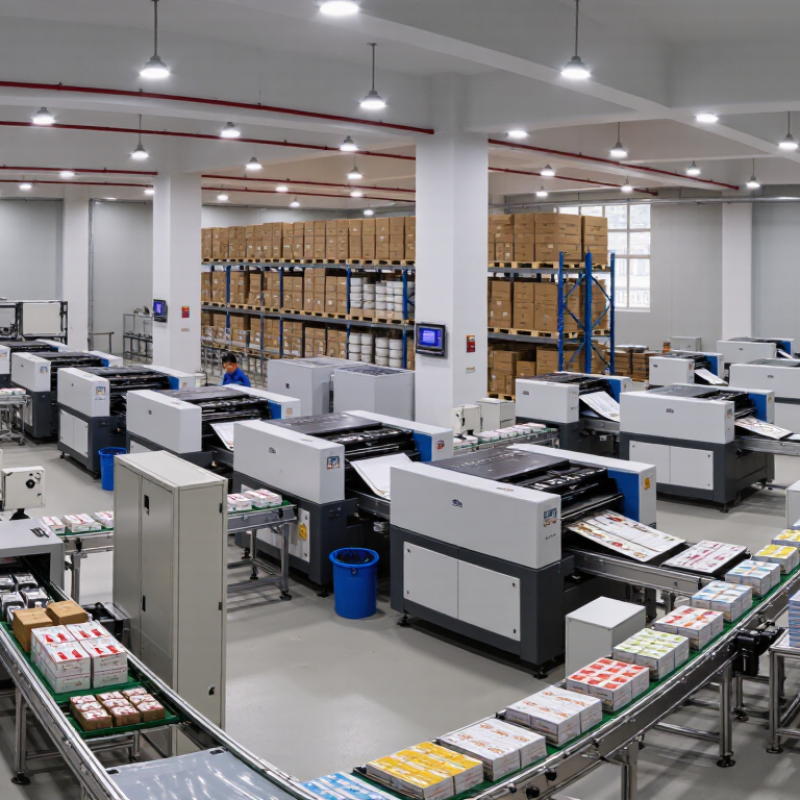
China’s packaging printing industry is broad, fast-moving, and difficult to define by company size alone. It includes flexible film converters, folding-carton printers, label specialists, and corrugated producers. According to Smithers’ 2024 packaging outlook, global packaging demand continues to expand through 2028, with Asia remaining the main growth engine. China’s scale comes from dense manufacturing clusters, strong export logistics, and short production cycles.
Industry leaders usually compete through process control, not slogans. A capable printer should show color-management records, substrate testing, ink-adhesion results, and documented quality inspections. Digital printing is gaining attention for short runs and variable designs. Gravure and flexographic systems still support high-volume packaging. The China Packaging Federation has repeatedly highlighted efficiency, recycling, and industrial upgrading as key development themes. Yet the industry is not perfectly uniform. Smaller factories may provide excellent craftsmanship, while some larger suppliers struggle with communication or customization. That is worth admitting.
Tips: Ask for recent samples, production tolerances, material certificates, and a clear reprint policy. Compare waste rates, not only unit prices. Request a pilot order before signing a long contract. Also check whether the supplier can trace colors across different batches. Small differences become obvious on a supermarket shelf. Sustainability claims need evidence, too. The supplier should explain recycled content, ink selection, and end-of-life conditions in practical terms. Mistakes still happen, especially when artwork, materials, and machinery are not reviewed together.
What Are the Top Packaging Printing Companies in China? - Defining China’s Packaging Printing Industry
| Industry Dimension | Current Industry Reality in China | Common Printing Technology | Key Buyer Requirements | Useful Evaluation Indicators |
|---|---|---|---|---|
| Flexible Packaging | A major packaging-printing segment serving food, beverages, household products, personal care, and industrial goods. | Rotogravure, flexographic printing, laminating, slitting, and pouch making. | Barrier performance, seal integrity, color consistency, food-contact compliance, and high-volume production. | Material structure, ink and adhesive compliance, defect rate, registration accuracy, and production traceability. |
| Folding Cartons | Widely used for pharmaceuticals, cosmetics, consumer electronics, food, beverages, and general retail products. | Sheet-fed offset printing with die-cutting, creasing, folding, gluing, and surface finishing. | Fine graphics, structural accuracy, premium finishing, short lead times, and reliable color management. | Color-control system, paperboard caliper, die-cut tolerance, finishing capability, and quality-inspection procedures. |
| Corrugated Packaging | One of the largest packaging applications in China, supported by e-commerce, manufacturing, logistics, and export activity. | Flexographic post-printing, flexographic pre-printing, digital corrugated printing, and inline converting. | Compression strength, dimensional stability, delivery reliability, recyclability, and cost efficiency. | Board grade, edge-crush performance, box-compression performance, flute profile, moisture control, and waste rate. |
| Labels and Self-Adhesive Packaging | A technology-intensive segment used for product identification, retail presentation, logistics, security, and regulatory information. | Flexographic, offset, gravure, screen, and digital label printing. | Small text clarity, variable data, adhesive performance, embellishment, barcode readability, and fast job changeovers. | Substrate compatibility, barcode verification, die-cut accuracy, adhesive specification, and variable-data control. |
| Pharmaceutical Packaging | A highly regulated application requiring strict control of printed information, traceability, and production documentation. | Offset, flexographic, gravure, coding, serialization, and inspection systems. | Data accuracy, tamper evidence, batch traceability, document control, and controlled production environments. | Inspection coverage, change-control process, batch records, serialization capability, and applicable regulatory compliance. |
| Premium and Luxury Packaging | Demand is concentrated in cosmetics, spirits, premium food, jewelry, and high-value consumer products. | Offset printing combined with hot foil stamping, embossing, debossing, spot coating, and specialty finishing. | Appearance consistency, tactile effects, color fidelity, low surface defects, and sophisticated sampling control. | Finishing repeatability, coating adhesion, foil coverage, embossing registration, sample approval, and inspection standards. |
| Digital Packaging Printing | Digital production is increasingly used for short runs, versioning, personalization, prototyping, and faster market testing. | Inkjet and electrophotographic digital printing with digital finishing equipment. | Low minimum order quantities, quick turnaround, variable content, reduced setup waste, and repeatable color output. | Job-change time, variable-data accuracy, color repeatability, substrate range, and total cost per finished unit. |
| Sustainability and Compliance | Recyclability, material reduction, low-VOC production, responsible sourcing, and food-contact safety are increasingly important purchasing criteria. | Water-based or lower-emission ink systems, optimized material structures, digital workflows, and waste-monitoring systems. | Documented material declarations, restricted-substance control, environmental certificates, and measurable waste reduction. | Applicable GB standards, ISO management systems, FSC or equivalent chain-of-custody status, VOC controls, and recycling compatibility. |
| Export Capability | Export-oriented suppliers commonly support multilingual artwork, international shipping documentation, overseas compliance, and multi-market packaging specifications. | Production technology varies by product category; workflow integration and prepress control are critical. | Stable lead times, export packing, inspection records, communication efficiency, and consistent quality across repeat orders. | Export experience, proofing process, Incoterms familiarity, packaging documentation, logistics coordination, and complaint-response time. |
| Recommended Supplier-Selection Weighting | A strong supplier should be evaluated by product fit and documented performance rather than by scale or marketing visibility alone. | Technology should match the required volume, substrate, artwork complexity, and finishing specification. | Suggested weighting: quality and compliance 30%, technical fit 25%, delivery 20%, total cost 15%, sustainability and service 10%. | Use audited samples, production trials, certificates, quality records, and total landed cost for final comparison. |
Related Posts
-

Top Packaging Printing Companies Worldwide
-
What Is the Best Packaging Printing Company in China?
-
Top Packaging Printing Companies for Global Buyers
-

Top 10 Packaging Printing Companies for Global Buyers
-

How to Choose the Right Package Printing Company?
-
How to Choose the Right Package Printing Company?