
Why Are Food Packaging Boxes Important for Global Buyers?
For global buyers, food packaging boxes are far more than attractive containers. They protect products during long journeys, warehouse handling, customs inspections, and retail display. A crushed corner can expose biscuits to moisture. A weak seam can ruin an entire shipment. Small details matter.
Packaging educator Walter Soroka defines packaging as “the science, art, and technology of enclosing and protecting products for distribution, storage, sale, and use.” His words explain why international buyers examine materials, structure, labeling, and performance together. Food packaging boxes must suit the product, climate, transport route, and market expectations. Recycled board may support sustainability goals, but it still needs suitable strength, hygiene, and moisture resistance. A bright printed box may attract shoppers, yet unclear information can reduce trust.
Reliability begins with evidence. Experienced suppliers should provide material specifications, food-contact documentation, quality records, and practical testing results. Drop tests, compression tests, and humidity checks reveal weaknesses before shipment. Buyers should also confirm whether inks, coatings, adhesives, and recycled fibers meet the destination market’s requirements. Rules differ.
So do supply chains.
The process is not perfect. Even careful teams can overlook a humid port, an unstable pallet, or a confusing translation. That is why responsible sourcing requires questions, samples, inspections, and honest revision. The best food packaging boxes balance protection, cost, branding, sustainability, and dependable performance. Their value becomes clearest when the product arrives clean, secure, and ready for consumers.
Definition and Scope of Food Packaging Boxes
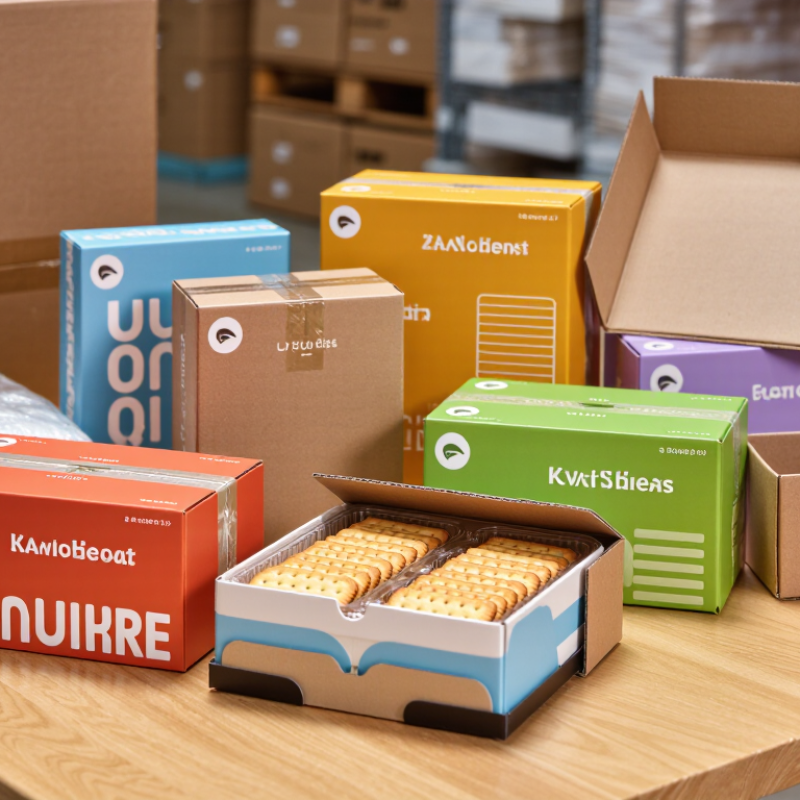
Food packaging boxes are containers designed to hold, protect, and present food during storage, handling, and delivery. They may be made from paperboard, corrugated fiberboard, or other approved materials. Their scope includes primary boxes touching food, secondary cartons grouping smaller packs, and transport cases used in distribution. Each type serves a different purpose.
For global buyers, the definition also includes performance requirements. A box may need grease resistance for pastries, moisture protection for frozen goods, or strong compression strength for warehouse stacking. Clear printing can show ingredients, allergens, batch details, and handling instructions. In practice, I have seen small design choices matter. A weak corner can collapse after long-distance transport. A loose inner fit can damage delicate products.
Food packaging boxes must suit the product, supply chain, and destination market. Material composition, food-contact safety, recyclability, and traceability deserve careful review. Requirements differ across regions, so buyers should request test records and production samples. One sample is not enough. Humidity, temperature changes, and vibration can produce different results.
More packaging is not always better. Extra layers may improve protection but increase material use and disposal challenges. Recycled fiber can perform well, yet its strength may change under moisture. This creates a practical trade-off, not a perfect formula. Buyers should compare protection, usability, environmental impact, and total shipping cost before approving a box design.
Why Are Food Packaging Boxes Important for Global Buyers? - Definition and Scope of Food Packaging Boxes
| Food Packaging Box Type | Typical Material Structure | Typical External Size Range | Primary Supply-Chain Function | Barrier Performance | Common Food Applications | End-of-Life Considerations | Key Checks for Global Buyers |
|---|---|---|---|---|---|---|---|
| Corrugated Shipping Box | Kraft linerboard and fluted paper medium; commonly single-wall or double-wall construction. | Approximately 150–600 mm in length, 100–400 mm in width, and 80–400 mm in height. | Protects packed food during palletizing, warehousing, parcel delivery, and international transport. | Good compression and impact protection; limited resistance to prolonged moisture unless treated. | Dry foods, canned goods, bottled products, snacks, subscription food shipments, and mixed cartons. | Usually recyclable when clean, dry, and free from food contamination; waxed or heavily laminated grades may reduce recyclability. | Confirm edge-crush strength, box compression strength, stacking pattern, flute grade, moisture exposure, and container-loading efficiency. |
| Folding Carton | Folding boxboard or solid bleached board, sometimes printed or coated with a thin functional layer. | Approximately 60–350 mm in length, 40–250 mm in width, and 20–180 mm in height. | Provides product presentation, unit-level protection, information, traceability, and retail shelf organization. | Good printability and stiffness; moisture and grease resistance depend on the coating and board grade. | Cereal, confectionery, tea, frozen foods, dry mixes, bakery products, and portioned foods. | Fiber-based cartons are generally recyclable if accepted by local systems; foil, plastic layers, and food residues can affect recovery. | Check board grammage, caliper, crease performance, print migration risk, food-contact suitability, folding accuracy, and required language panels. |
| Paperboard Takeaway Box | Paperboard or kraft paperboard with a grease-resistant, moisture-resistant, or heat-resistant coating. | Approximately 100–300 mm in length, 80–220 mm in width, and 40–160 mm in height. | Holds prepared food for short-term service, takeaway, delivery, and portion control. | Designed for resistance to grease, condensation, and moderate heat; performance varies by coating and closure design. | Fried foods, noodles, bakery items, sandwiches, salads, rice dishes, and ready-to-eat meals. | Uncoated fiber is easier to recycle; food contamination and plastic or fluorochemical barriers may limit recycling or composting options. | Verify hot-food performance, leakage resistance, ventilation, coating chemistry, closure security, stacking stability, and local disposal labeling. |
| Rigid Paper Food Box | Thick paperboard, chipboard, or laminated board formed into a rigid structure, often with an inner liner or insert. | Approximately 100–400 mm in length, 80–300 mm in width, and 30–200 mm in height. | Provides premium presentation, structural protection, compartmentalization, and reusable secondary packaging potential. | Good stiffness and dimensional stability; barrier performance depends on liners, coatings, and inserts. | Gift foods, specialty confectionery, tea sets, dry foods, bakery assortments, and multi-component food products. | Recyclability is highest when the box is predominantly fiber and easy to separate from plastic, foam, or metal components. | Evaluate material separation, hinge and magnet components, product fit, tolerance control, flat-pack efficiency, and total packaging weight. |
| Insulated Food Shipping Box | Corrugated outer box combined with molded fiber, paper-based insulation, foam, or reflective liner components. | Approximately 250–650 mm in length, 180–500 mm in width, and 150–450 mm in height. | Helps maintain temperature during delivery and reduces physical damage to chilled or temperature-sensitive food. | Thermal protection depends on insulation thickness, closure quality, refrigerant placement, and transit duration. | Chilled foods, frozen foods, meal kits, seafood, fresh produce, dairy products, and prepared meals. | Components should be separated where possible; mixed-material insulation systems may require specialized collection routes. | Confirm thermal test conditions, target transit time, pack-out configuration, condensation control, dimensional weight, and disposal instructions. |
| Aseptic or Liquid Food Carton | Multilayer paperboard structure incorporating polymer layers and, for some formats, a thin aluminum barrier layer. | Approximately 50–100 mm in length, 35–90 mm in width, and 100–300 mm in height. | Enables long shelf life for liquid foods without refrigeration before opening when properly processed and sealed. | Strong protection against light, oxygen, moisture, and external contamination through a multilayer barrier system. | Milk-based drinks, juices, broths, sauces, liquid desserts, and plant-based beverages. | Composite construction requires dedicated separation and recycling infrastructure; availability differs significantly by market. | Check filling compatibility, seal integrity, shelf-life validation, migration compliance, recycling availability, and transport cube utilization. |
| Molded Fiber Food Box | Formed cellulose fiber from recycled paper or plant fiber, with optional water, oil, or heat-resistant treatment. | Approximately 100–350 mm in length, 80–250 mm in width, and 30–150 mm in height. | Provides shape, cushioning, and portion containment while supporting a fiber-based packaging format. | Good rigidity and cushioning; liquid and grease resistance depend on surface treatment and wall thickness. | Produce trays, bakery items, takeaway meals, egg products, snacks, and protective inserts for food shipments. | May be recyclable or compostable depending on fiber source, coating, additives, contamination, and local collection facilities. | Verify pulp composition, moisture absorption, odor transfer, food-contact testing, nesting efficiency, mold precision, and local disposal claims. |
| Multi-Compartment Food Box | Paperboard, corrugated board, molded fiber, or a combination of fiber and food-contact inserts. | Approximately 150–400 mm in length, 100–300 mm in width, and 40–180 mm in height. | Separates different foods, prevents mixing, controls portions, and improves product presentation during delivery. | Performance depends on compartment walls, leak resistance, coatings, and the compatibility of adjacent foods. | Combo meals, meal kits, snack assortments, bakery selections, catering portions, and ready meals. | Single-material designs simplify recovery; permanently attached liners or mixed-material inserts can complicate recycling. | Assess partition strength, leak prevention, food temperature, ventilation, opening experience, packing speed, and nesting or stacking behavior. |
| Export-Grade Wooden Food Box | Solid wood, plywood, or wood-based panels with food-safe liners, dividers, or moisture-control components where required. | Approximately 200–1,200 mm in length, 150–800 mm in width, and 100–600 mm in height. | Provides high mechanical protection for heavy, fragile, or premium food products during long-distance transport. | High structural strength; natural wood can absorb moisture unless sealed or protected. | Bottled foods, fresh produce, seafood, specialty agricultural products, and heavy food gift assortments. | Wood can be reused or recovered, but international shipments may require treatment and compliance with wood-packaging quarantine rules. | Check wood treatment documentation, moisture content, pest-control requirements, load-bearing capacity, nail safety, and customs restrictions. |
Note: Size ranges are indicative external dimensions rather than universal specifications. Actual requirements depend on product weight, food-contact regulations, transport conditions, shelf-life targets, local recycling infrastructure, and the destination market.
Related Posts
-
China Best Food Packaging Boxes Wholesale Supplier?
-
Why is Sustainability Essential in the Packaging Industry?
-

2026 Top Trends in Packaging Printing You Should Know?
-
2025 Top 10 Food Packaging Materials You Need to Know for Sustainability
-

10 Best Folding Carton Packaging Suppliers Worldwide
-
What Are Food Packaging Materials? Essential Types and Their Uses Explained