
Best Types of Paper Food Packaging in 2026?
Choosing the best paper food packaging in 2026 requires more than selecting a brown carton. It demands practical testing, material knowledge, and honest evaluation. A package must protect food from moisture, grease, crushing, temperature changes, and careless handling. It must also support efficient storage, clear branding, and responsible disposal.
Walter Soroka, a respected packaging educator and author, defines packaging as “the science, art, and technology of enclosing and protecting products for distribution, storage, sale, and use.” This principle remains highly relevant to paper food packaging. A molded-fiber tray may suit fresh produce, while coated paperboard can perform better for takeaway meals. Kraft paper works well for dry foods, but it can struggle with oily sauces. Small details matter.
Real performance is rarely perfect.
Manufacturers should test seal strength, leak resistance, stacking stability, and food-contact safety before making claims. Recycled fiber can reduce resource demand, yet its quality may vary. Water-based coatings appear promising, but they do not automatically make every package recyclable. Local recycling systems also differ, sometimes significantly. That inconvenient fact deserves attention.
This guide compares leading paper food packaging types for 2026. It considers practical use, sustainability, barrier performance, customer experience, and production cost. The recommendations draw on packaging principles, industry applications, and measurable product requirements. However, no single material wins every situation. The strongest choice depends on the food, supply chain, equipment, and disposal conditions.
What Paper Food Packaging Means and Why It Matters in 2026
Best Types of Paper Food Packaging in 2026?
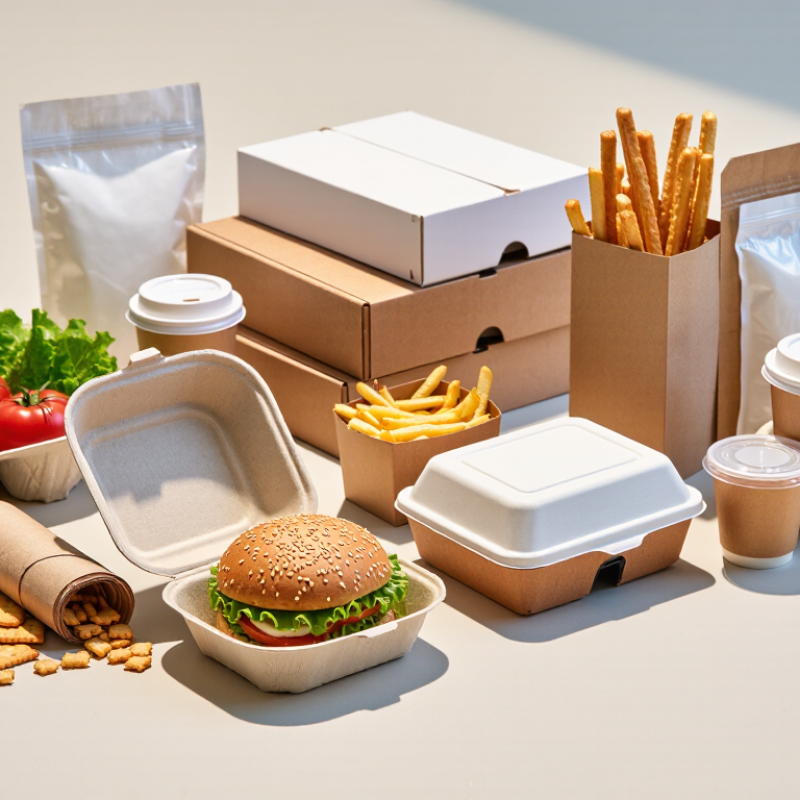
Paper food packaging means more than a brown takeaway box. It includes grease-resistant wraps, coated paperboard trays, molded-fiber bowls, cartons, and corrugated delivery boxes. Each type manages heat, oil, moisture, stacking, and transport differently. In 2026, that performance matters because packaging must protect food without creating unnecessary waste.
The Smithers report, The Future of Paper and Board Packaging to 2028, estimates the global market will exceed 500 billion dollars by 2028. This growth reflects demand for renewable fiber, but paper is not automatically sustainable. Plastic coatings, chemical barriers, inks, and food residue can complicate recycling. A clean fiber tray behaves differently from a greasy one. That detail is often ignored.
Food protection also carries environmental value. The UN Environment Programme reported that 1.05 billion tonnes of food were wasted in 2022. Strong packaging can reduce crushing, leakage, and premature spoilage during delivery. Yet more material is not always better. In packaging trials, a thin paper wrap may fail around oily noodles, while a heavier structure adds avoidable weight. The honest answer is less comfortable: “paper” describes a material family, not a complete sustainability solution. Designers should test real meals, local recycling systems, moisture exposure, and disposal habits before choosing a format.
| Packaging Type | Typical Food Uses | Common Material Structure | Moisture and Grease Resistance | Recyclability Considerations | Key 2026 Sustainability Advantage | Overall Suitability |
|---|---|---|---|---|---|---|
| Corrugated Fiberboard Boxes | Meal delivery, produce, bakery assortments, and bulk food transport | Fluted paper layer bonded between paperboard liners | ★★★★☆ | Generally recyclable when clean and free from extensive food contamination; wax or plastic coatings can affect recovery | Strong protection with a high proportion of renewable fiber and good stacking performance | Excellent for transport and larger food orders |
| Folding Cartons | Dry foods, frozen foods, cereals, snacks, and prepared meals | Foldable paperboard, often printed and sometimes barrier-coated | ★★★☆☆ | Usually recyclable if the carton is predominantly fiber-based and coatings do not prevent pulping | Lightweight format that uses less material than rigid packaging while offering efficient shelf presentation | Excellent for dry and semi-dry foods |
| Paperboard Takeaway Boxes | Hot meals, noodles, rice dishes, sandwiches, and side dishes | Paperboard with grease-resistant treatment or a certified food-contact barrier | ★★★★☆ | Recycling depends on local rules, food residue, and whether the barrier is fiber-based or polymer-based | Combines portability, stackability, and portion control for takeaway service | Very good for short-term food service use |
| Paper Food Trays | French fries, fried snacks, pastries, street food, and ready-to-eat portions | Folded or pressed paperboard, commonly with a grease-resistant coating | ★★★☆☆ | Clean, uncoated trays are easier to recycle; heavily soiled or laminated trays may require disposal | Uses relatively little material and supports quick serving with minimal packaging weight | Very good for dry or moderately greasy foods |
| Paper Cups | Hot and cold beverages, soups, desserts, and small liquid servings | Paperboard body with a liquid-resistant lining; some newer formats use fiber-based barriers | ★★★★☆ | Conventional lined cups often require specialized collection; fiber-based barrier designs can improve recycling options where accepted | Lower weight than many rigid alternatives and suitable for high-volume beverage service | Good when barrier and end-of-life systems are clearly defined |
| Paper Bags and Sachets | Bakery items, snacks, takeaway foods, dry ingredients, and produce | Single or multi-layer kraft paper, sometimes with a thin barrier layer | ★★☆☆☆ | Plain paper bags are widely recyclable; grease, moisture, windows, and multilayer laminates may limit recycling | Simple construction, low material use, and strong compatibility with paper recycling systems | Excellent for dry foods and short carry periods |
| Molded Fiber Containers | Eggs, fresh produce, protective inserts, takeaway meals, and food trays | Formed fibers made from recycled paper or other plant-based cellulose sources | ★★★☆☆ | Often recyclable or compostable depending on additives, coatings, contamination, and local infrastructure | Provides cushioning and shape without relying primarily on conventional rigid plastic | Very good for protective and portioned food packaging |
| Paper-Based Pouches | Dry snacks, coffee, powders, baking ingredients, and lightweight foods | Paper outer layer combined with moisture, oxygen, or aroma barriers | ★★★★☆ | Monomaterial fiber structures are more favorable; foil and mixed plastic laminates complicate recycling | Can reduce packaging weight and improve product-to-package efficiency compared with rigid formats | Good for dry foods when the barrier is appropriately designed |
| Greaseproof and Glassine Paper | Bakery products, confectionery, sandwiches, deli foods, and food wrapping | Densely manufactured, smooth paper with grease-resistant properties | ★★★☆☆ | Uncoated grades are generally compatible with paper recycling, subject to food contamination and local rules | Supports direct wrapping with a thin, lightweight material and can reduce the need for rigid containers | Excellent for bakery and moderately greasy foods |
| Paper Food Wraps | Sandwiches, burgers, wraps, bakery foods, and prepared portions | Flexible paper with grease, moisture, or heat-resistant treatment | ★★★☆☆ | Recyclability is highest when the wrap is uncoated or uses a compatible fiber-based barrier and remains relatively clean | Uses less material than boxes and allows efficient wrapping around irregular food shapes | Very good for immediate consumption |
Related Posts
-
How to Choose the Right Package Printing Company?
-
Why Is the Food Packaging Industry Important?
-
Top Packaging Printing Companies Worldwide
-
How to Choose Effective Food Packaging Design in 2026?
-
Top Packaging Materials Trends to Watch in 2026?
-

Top 10 Tips for Choosing Packaging Materials Effectively?