How to Choose Pastry Packaging for Global Shipping in 2026?

Choosing pastry packaging for global shipping in 2026 requires more than attractive boxes. A pastry may leave a chilled bakery, cross several warehouses, and arrive after days of handling. Its package must protect shape, texture, freshness, and presentation throughout that journey. The best choice depends on the product, route, climate, and delivery speed.

A laminated croissant needs different protection from a delicate tart with soft cream. For each item, assess moisture, grease, compression, vibration, and temperature exposure. Use food-contact materials from traceable suppliers, with clear specifications and documented quality checks. Test filled cartons with corner drops, stacking pressure, condensation, and realistic transit delays. Details matter. A small gap can turn a neat pastry into a damaged order.

In practice, packaging decisions are rarely perfect on the first trial. A rigid insert may prevent movement but increase material use and shipping weight. A recyclable paper solution may look responsible but fail when humidity rises. These trade-offs deserve honest review, not confident assumptions. Consult packaging engineers, food-safety professionals, and logistics partners before scaling production. Check destination requirements and carrier guidance for current, applicable information. This guide explains how to compare structures, insulation, seals, labels, and costs. It also questions common shortcuts, because reliable global delivery depends on evidence, testing, and continuous improvement.
How to Choose Pastry Packaging for Global Shipping in 2026?

Define the Shipping Requirements of Your Pastry Products

Before selecting pastry packaging, define how the product will travel. A delicate choux pastry needs different protection from a dense fruit bar. Record size, weight, filling, icing, moisture level, and expected shelf life. Note whether the pastry must remain crisp, soft, chilled, or frozen. These details control insulation, ventilation, seals, and internal spacing. Keep every requirement measurable. “Fresh” is not a shipping specification.

Map the real route, not the ideal one. Include warehouse delays, airport transfers, weekend storage, temperature swings, humidity, vibration, and stacking pressure. For each destination, set acceptable temperature and transit limits. A refrigerated pastry may face a warm loading dock for two hours. Plan for that risk. Use temperature indicators or data loggers during trial shipments. Drop tests and compression tests can reveal failures that a clean showroom sample hides. I once focused on impact protection and overlooked condensation; the crust softened before delivery. That mistake changed the packaging design.

Choose packaging after these requirements are written. Food-contact materials should suit the pastry and its temperature range. The inner tray should prevent movement without crushing decoration. The outer carton needs strength for repeated handling. Seal performance matters. So does opening. Test parcels through different climates and delivery speeds. Check leakage, odor transfer, broken toppings, soggy bases, and label readability. A package that works on one route may fail on another. Review the results with production and logistics teams before ordering at scale.

Compare Packaging Materials, Structures, and Protective Features

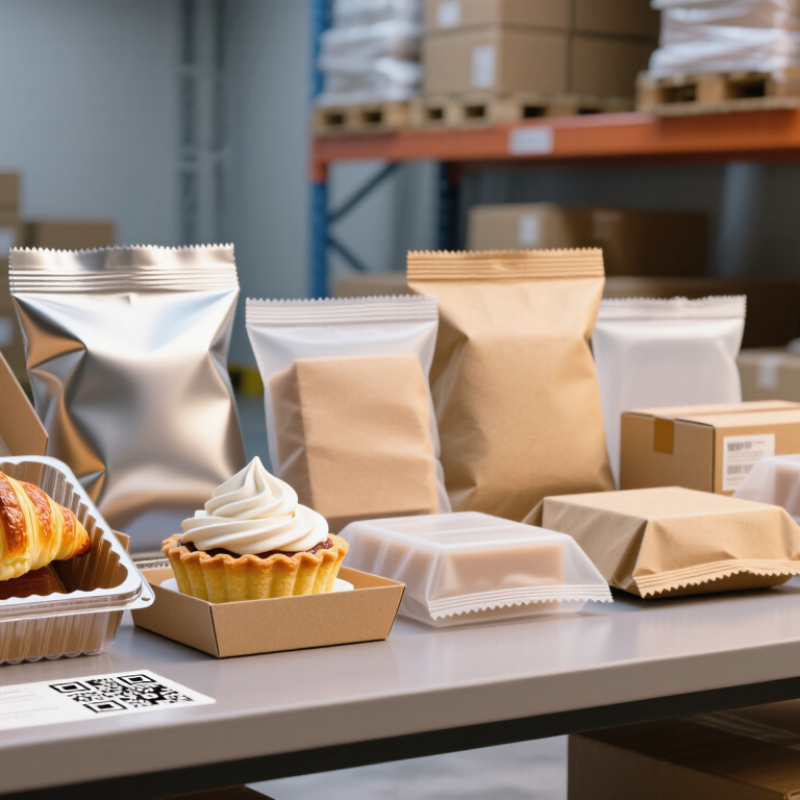
Choosing pastry packaging for global shipping in 2026 requires more than attractive presentation. Material, structure, and protection must work together. Corrugated board offers strong stacking performance and low weight. Molded fiber adds cushioning and supports a more natural appearance. Clear plastic containers protect delicate decoration, but they may trap moisture. A poor material choice can turn crisp pastry soft overnight.

Structure matters during long transfers. Use a snug tray with separate cavities for macarons, tarts, or iced cookies. Rigid walls reduce crushing under stacked cartons. A small headspace can protect toppings from rubbing against the lid. Ventilation helps release condensation, although too many openings may reduce freshness. In practical shipping tests, corner protection often matters more than thicker walls. No package survives every route.

Tips: Test packed pastries through vibration, drops, and temperature changes. Check the box after twenty-four hours. Look for shifted fillings, cracked icing, and moisture inside the lid. Use a sealed inner pouch when freshness is critical. Add a removable absorbent pad only when it is suitable for food packaging. Avoid excessive cushioning; it increases size, cost, and shipping impact. Recheck your design with different pastry shapes. One successful trial proves little.

Adapt Packaging to Global Climate and Transportation Risks

How to Choose Pastry Packaging for Global Shipping in 2026?

Global pastry shipping now requires climate-specific packaging, not one universal box. The World Meteorological Organization reported that 2024 was approximately 1.55°C above the 1850–1900 average. Hotter routes can soften chocolate, melt fillings, and weaken coatings. Cold routes create another risk: condensation during airport or warehouse transfers. Use insulated liners, moisture barriers, and temperature-sensitive separators when the product requires them. Test each design across realistic temperature changes.

Transport conditions also matter. UNCTAD’s Review of Maritime Transport 2024 states that over 80% of global merchandise trade moves by sea. A pastry may face vibration, compression, humidity, and long dwell times. Select rigid outer cartons with internal spacing that prevents sliding. A sealed inner pouch can protect texture from moisture, but excessive sealing may trap condensation. That detail is easy to miss.

Use distribution testing based on recognized protocols, such as ISTA procedures, and record results by route. Test a box after heat exposure, overnight chilling, and repeated handling. The weakest corner often decides the outcome. Packaging that survives a laboratory test may still fail when loading is rushed. Review pastry shape, filling moisture, transit duration, and seasonal weather before approving the final format. Data helps, but real-route trials remain necessary.

How to Choose Pastry Packaging for Global Shipping in 2026? - Adapt Packaging to Global Climate and Transportation Risks

Shipping Risk or Climate Typical Conditions Likely Pastry Damage Recommended Packaging Adaptation Useful Design or Test Target
Hot and humid routes High ambient temperature and relative humidity; repeated exposure to warm loading areas and humid air. Chocolate softening, icing deformation, soggy crusts, label lifting, and moisture migration. Use moisture-resistant liners, a sealed primary pouch where appropriate, breathable separation for crisp products, and insulated packaging for temperature-sensitive fillings. Select materials that maintain seal and stiffness after conditioning at approximately 30–35 °C and 70–90% RH.
Cold or freezing routes Temperatures may fall below 0 °C during winter transport, aircraft handling, or outdoor storage. Cracked coatings, brittle films, broken seals, condensation after warming, and texture changes. Choose cold-flexible films, impact-resistant trays, sealed packs, and protective cushioning. Add a controlled warming instruction when condensation is a concern. Verify flexibility, seal strength, and drop performance after low-temperature conditioning, for example at 0 °C or below when the route requires it.
Rapid temperature changes Repeated transitions between refrigerated, ambient, and heated environments during handling and delivery. Condensation, softened pastry surfaces, fogged windows, adhesive failure, and loss of crispness. Reduce internal air volume, use moisture barriers, separate wet and dry components, and avoid sealing products while they are still warm. Conduct a temperature-cycle check and inspect the package for water droplets, seal opening, and visible product changes.
Long-distance air freight Pressure changes, vibration, repeated transfers, limited manual control, and possible exposure to low-humidity air. Tray movement, lid displacement, icing damage, product breakage, and package leakage. Use fitted inserts, tamper-evident closures, headspace control, lightweight cushioning, and a rigid outer carton with minimal empty space. Test for vibration, compression, and repeated drops using the planned parcel configuration and the heaviest expected shipping weight.
Sea freight and container exposure Extended transit, high humidity, salt-laden air, container heat, and possible condensation or “container rain.” Mold risk, carton weakening, corrosion of metal components, odor absorption, and moisture-related texture loss. Use high-moisture-resistance secondary packaging, ventilation where suitable, clean odor-neutral materials, and desiccant only when compatible with food-safety requirements. Evaluate carton compression after high-humidity conditioning and define a maximum validated shelf-life for the complete pack.
Rain, snow, and wet handling Packages may be exposed to precipitation, wet docks, damp vehicles, or condensation on external surfaces. Carton collapse, water stains, unreadable labels, and contamination risk after outer-pack damage. Use a water-resistant outer layer, raised labels, sealed seams, and an internal food-contact barrier that remains intact if the carton becomes damp. Check water resistance, label adhesion, and compression strength after wet exposure.
Compression and stacking Cartons may be stacked, loaded unevenly, or subjected to sustained weight during storage and transport. Crushed corners, flattened pastries, cracked lids, and reduced package protection. Use a rigid board grade, corner protection, load-bearing dividers, and a footprint that supports stable pallet or parcel stacking. Set the compression target from actual stack height, package weight, humidity, and expected storage duration rather than using a universal value.
Shock, drops, and vibration Parcel handling can include impacts, conveyor transfers, vehicle vibration, and accidental drops. Broken biscuits, displaced decorations, cracked shells, and punctured or leaking packs. Prevent product movement with cavities or dividers, cushion fragile areas, and keep delicate toppings away from the lid. Perform a realistic parcel drop and vibration sequence with the product inside, then inspect both cosmetic and food-safety outcomes.
Extended delivery time Customs delays, weekend storage, missed delivery attempts, and route changes can extend transit beyond the planned schedule. Staling, rancidity, microbial growth, odor transfer, and reduced visual quality. Match barrier performance to the validated shelf-life, use date and storage instructions, and separate products with different stability requirements. Validate the complete product-package system for the longest reasonably foreseeable transit time, not only the average delivery time.
Food-contact and regulatory variation Packaging may cross jurisdictions with different food-contact, labeling, recycling, and documentation requirements. Border delays, rejected materials, incorrect disposal instructions, or loss of traceability. Maintain material declarations, migration and suitability records, multilingual handling information, batch coding, and route-specific compliance checks. Approve every food-contact layer for the intended food type, temperature range, storage period, and destination market.
Sustainability and dimensional efficiency International shipping increases material use, volumetric freight charges, and the need for efficient end-of-life handling. Higher transport cost, excessive waste, and difficult recycling when materials are unnecessarily mixed. Right-size the pack, remove avoidable void space, use mono-material solutions where performance permits, and design components for practical separation or recycling. Measure product protection, package mass, packed volume, damage rate, and material recovery options together before final approval.
Practical selection rule: Choose the lightest and smallest packaging format that keeps the pastry within its validated temperature, humidity, impact, compression, food-contact, and shelf-life limits for the entire route.

Check Food Safety, Customs, and Sustainability Requirements

Choosing pastry packaging for global shipping in 2026 starts with food safety, not appearance. Use food-contact materials with supplier declarations, migration test records, and batch traceability. Confirm that inks, adhesives, coatings, and recycled fibers suit the pastry. A greasy croissant can expose weak barriers within hours. Test filled boxes through vibration, compression, and temperature changes before shipping. Keep allergen control visible. Shared packing areas can create risks.

Customs requirements can delay safe food. Match packaging descriptions, invoice details, and tariff classifications accurately. Some countries request material composition, origin data, or import permits. Ask the carrier or customs broker about current destination rules. Do not assume one certificate works everywhere. Include labels in the required language, with ingredients, allergens, net weight, dates, and storage conditions. Protect documents digitally and inside a waterproof pouch. Small errors become expensive.

Sustainability needs evidence, not attractive claims. Choose right-sized packs, recycled content, and materials accepted by local recycling systems. A compostable liner may fail when the destination lacks industrial composting. Compare total weight, insulation, damage rates, and disposal routes. I have learned that a lighter box is not always greener if crushed pastries require replacements. That lesson is easy to miss. Review test results after each shipping season, and record complaints honestly. Reliable packaging improves through correction.

Test Costs and Finalize the Packaging for International Delivery

For international pastry delivery in 2026, packaging decisions should begin with measured tests, not attractive samples. A box may survive a warehouse shelf but fail after several transfers. I test filled pastry units at their actual weight, including liners, seals, and cooling materials. Small details matter. A loose insert can turn a delicate edge into crumbs. Record dimensions, empty weight, assembly time, and temperature exposure for every trial. This evidence helps compare suppliers and prevents optimistic guesses.

Build a practical cost sheet for each design. Include packaging, labor, storage, rejected pieces, and transport volume. Then run drop, vibration, compression, and humidity tests. Use cold and warm conditions that reflect the planned route. A ten-box pilot shipment reveals problems that a laboratory table may hide. Check crushed corners, oil stains, softened coatings, and condensation inside the carton. I once preferred a cheaper insert, but it shifted during transit. The saving disappeared after rework. That mistake still influences my testing process.

Finalize the design only after reviewing damage rates and total cost per delivered pastry. Choose cushioning that protects shape without trapping unnecessary moisture. Confirm that staff can pack it consistently under time pressure. Ask an independent packaging engineer to review weak points when shipment value is high. Keep test photos, measurements, and revisions in one dated file. Do not treat the first successful trial as proof. Routes change, and packaging can age in storage. Test the weak points again.